
The Trading Industry in 2026: 5 Trends Shaping the Next Generation of Traders
The trading industry in 2026 looks very different from the market environment traders knew only a few years ago.
Artificial intelligence is becoming part of everyday market analysis. Traders can move between asset classes from a single platform. Execution technology continues to develop, while regulation, transparency and access to financial education are becoming increasingly important parts of the overall trading experience.
At the same time, traders themselves are changing.
Access to information has never been easier, but having more information does not automatically lead to better decisions. Today’s traders must learn how to filter data, understand different markets, evaluate trading conditions and manage risk in an environment that moves faster than ever.
Technology may be changing the tools, but the fundamentals remain familiar: preparation, discipline, risk management and continuous learning still matter.
So, what is actually shaping the trading industry in 2026?
Here are five trends that are influencing the next generation of traders.
1. AI and Data Are Changing How Traders Analyse Markets
Artificial intelligence has quickly moved from being a futuristic concept to becoming part of the everyday financial landscape.
In 2026, traders have access to tools capable of processing large amounts of market data, summarising financial news, identifying patterns, monitoring sentiment and supporting different forms of technical and fundamental analysis.
Tasks that once required hours of research can now be completed much faster.
But there is an important distinction between using AI to process information and allowing AI to make decisions without oversight.
Financial markets are influenced by central bank decisions, economic indicators, geopolitics, company results, unexpected news and human behaviour. Historical patterns can be useful, but markets do not always behave according to historical expectations.
AI-generated analysis also depends heavily on the quality, relevance and timing of the data it receives.
This means the role of the trader is not disappearing. Instead, it is changing.
The next generation of traders may spend less time manually collecting information and more time asking better questions:
- Where does this data come from?
- Is the information current?
- What assumptions are behind this analysis?
- Does another source confirm the conclusion?
- What happens if the market moves in the opposite direction?
AI can support analysis, but critical thinking remains essential.
The real advantage in 2026 may therefore not belong to the trader with the most technology. It may belong to the trader who understands how to combine technology, market knowledge and disciplined decision-making.
2. Multi-Asset Trading Is Becoming the New Normal
There was a time when many traders focused almost entirely on one market.
A Forex trader traded currencies. An equity trader watched stocks. A commodities trader followed gold or oil.
That separation is becoming less relevant.
Today’s financial markets are deeply interconnected, and one event can create movements across several asset classes at the same time.
Consider a major change in interest-rate expectations.
It may influence the value of a currency, government bond yields, equity indices, gold prices and broader market sentiment. An unexpected geopolitical development can affect oil, currencies and shares simultaneously. Strong economic data from one major economy can quickly influence markets around the world.
Understanding only one chart may therefore provide only one part of the picture.
This is one reason multi-asset trading continues to become increasingly relevant in 2026.
Instead of viewing Forex, indices, commodities and shares as completely separate markets, traders are increasingly looking at the relationships between them.
For example, a trader analysing EUR/USD may also monitor expectations surrounding European and US interest rates. Someone watching gold may pay attention to the US dollar, Treasury yields and risk sentiment. A trader following a major stock index may consider macroeconomic data, individual company performance and central bank communication.
This does not mean traders need to trade every available asset.
In fact, trying to follow too many markets can easily create information overload.
The advantage of a multi-asset environment is choice.
Traders can focus on the markets that fit their strategy while still observing other asset classes for additional context.
For the next generation of traders, understanding intermarket relationships could become just as important as understanding individual instruments.
3. Execution Quality Is Moving Into the Spotlight
For many traders, the first thing they look at when comparing trading conditions is the spread.
That makes sense - trading costs matter.
But in 2026, experienced traders are increasingly looking beyond one number.
The quality of a trading experience can also depend on factors such as execution speed, liquidity, slippage, platform stability and the conditions available when markets become volatile.
Imagine seeing a price on the screen and deciding to enter a position.
Between the moment the order is submitted and the moment it is executed, the market can move. In highly liquid and stable conditions, that difference may be small. During periods of significant volatility, prices can change much more quickly.
This is where execution quality becomes important.
Professional traders understand that a competitive spread is only one part of the equation. They also consider how orders are handled and whether the trading infrastructure can perform reliably when markets become active.
Execution becomes particularly relevant around events such as:
- Major central bank announcements.
- Inflation reports.
- Employment data.
- Important company earnings.
- Elections and political developments.
- Unexpected geopolitical events.
These periods can bring rapid changes in liquidity and pricing.
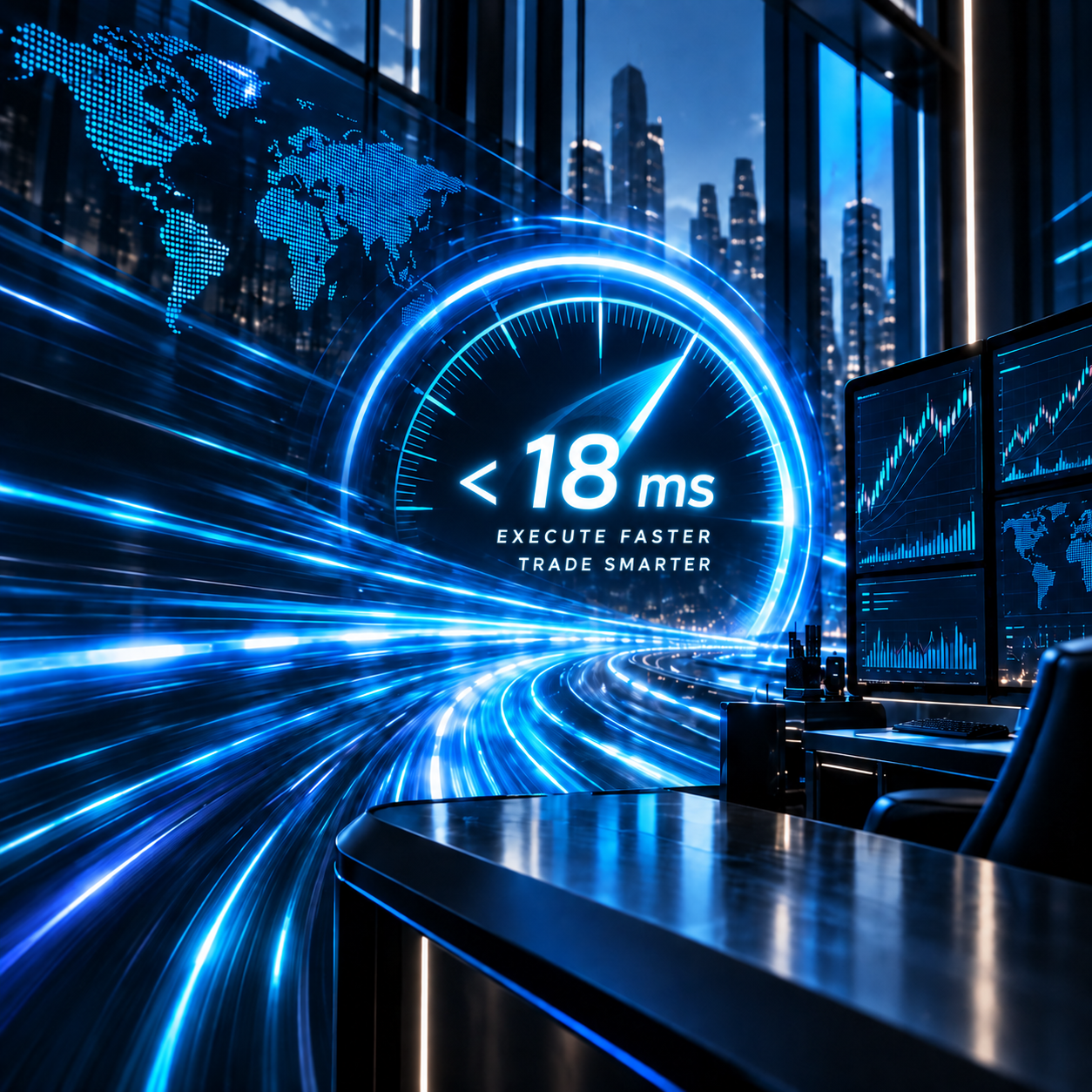
The development of trading technology has also increased expectations. Traders now expect platforms to be fast, accessible and stable across different devices. At Finveo, this is reflected in an execution speed of under 18 milliseconds, supporting a trading environment designed to respond efficiently in fast-moving markets.
As a result, broker selection is becoming more sophisticated.
Instead of asking only, “What is the spread?”, traders are increasingly asking:
What is the overall quality of the trading environment?
That is a much broader - and more useful - question.
4. Regulation and Transparency Are Becoming Part of the Trading Experience
Technology may receive most of the attention, but one of the most important trends shaping the trading industry in 2026 is happening behind the scenes.
Regulation continues to evolve alongside financial technology.
As trading becomes increasingly digital and accessible across borders, regulators and financial institutions are placing greater emphasis on investor protection, transparency, clear communication and responsible market participation.
For traders, this changes what they should expect from financial service providers.
A modern trading relationship is not only about access to a platform.
Traders increasingly expect clear information about products, costs, risks, trading conditions and the regulatory status of the company they choose to work with.
Transparency is therefore becoming a competitive factor as well as a regulatory requirement.
This is especially important in leveraged trading.
Products such as CFDs can provide access to global financial markets, but leverage can amplify both profits and losses. Understanding how margin works, what risks are involved and how different market conditions can affect an open position is essential before trading.
The next generation of traders appears increasingly interested in knowing more about the infrastructure behind their trading activity.
Questions such as these matter:
- Who regulates the broker?
- Are risks clearly explained?
- Are trading conditions transparent?
- Is information about the company easy to find?
- What educational and support resources are available?
In an industry built around technology, trust remains remarkably human.
And in 2026, transparency, security and regulatory standards remain central to building that trust.
5. Education and Trading Communities Are Becoming More Important - Not Less
With thousands of videos, social media accounts, newsletters, trading groups and AI tools available online, it might seem that formal trading education has become less important.
The opposite may be true.
The challenge today is no longer finding information.
The challenge is identifying which information deserves attention.
A new trader can receive dozens of opinions about the same market within minutes. One analyst may expect prices to rise. Another may expect a correction. A social media account may promote a completely different scenario.
Without a solid understanding of market fundamentals, technical analysis and risk management, it can be difficult to separate useful information from noise.
That is why structured trader education continues to matter.
Understanding basic concepts such as leverage, margin, spreads, stop-loss orders, position sizing, volatility and risk-to-reward relationships provides a framework through which traders can evaluate new information.
Education also does not end once the basics have been learned.
Markets evolve.
Strategies that work in one environment may behave differently in another. Volatility changes. Technology develops. New tools appear. Regulations change.
Continuous learning is therefore becoming part of the trader’s routine.
At the same time, trading communities are playing a larger role.
Trading can be a highly individual activity, but access to other market participants can expose traders to different perspectives, ideas and approaches.
The value of a trading community should not come from blindly copying someone else’s position. Its real value comes from discussion, education and the ability to challenge your own assumptions.
A strong community can encourage traders to ask better questions rather than simply search for quick answers.
And that may be one of the most important skills in modern markets.
What Does the Next Generation of Trading Look Like?
The biggest change in the trading industry in 2026 may not be any single technology or market trend.
It is the combination of all of them.
The next generation of traders has access to tools that previous generations could hardly imagine: advanced trading platforms, real-time market information, AI-supported analysis, multiple global asset classes and educational resources available almost instantly.
But better tools do not eliminate risk.
They make the ability to use those tools responsibly even more important.
Successful participation in financial markets still requires preparation. Traders still need to understand what they are trading, why they are entering a position and how much risk they are prepared to take.
Technology can improve efficiency.
Multi-asset access can create flexibility.
Better execution infrastructure can improve the trading experience.
Regulation and transparency can strengthen trust.
Education and communities can improve market understanding.
But ultimately, the trader remains responsible for the decision.
Looking Beyond 2026
The trading industry will continue to evolve. Artificial intelligence is likely to become more integrated into financial analysis. Platforms will continue to improve. Access to international markets will become increasingly seamless, while regulators and financial institutions will continue adapting to new technologies and changing investor behaviour.
For traders, the objective should not simply be to follow every new trend.
It should be to understand which developments genuinely improve the way they analyse markets, manage risk and make decisions.
The traders who adapt most effectively may not necessarily be those who trade more frequently or use the largest number of tools.
They may simply be the ones who remain curious, informed and disciplined while the market around them continues to change.
At Finveo, our focus remains on giving traders access to global markets alongside competitive trading conditions, technology, education and a community designed to support continuous development.
These are also some of the conversations shaping this year's Forex Expo Dubai, where the Finveo team will be meeting traders, partners and industry professionals.
Forex Expo Dubai 2026 takes place on 22–23 September at Dubai World Trade Centre, bringing together participants from across the global trading and financial services industry.
As markets, technology and trader expectations continue to evolve, one thing remains certain:
The future of trading will not simply be defined by having more information - but by knowing how to use it.