
EURUSD
- EUR/USD Price: The EUR/USD pair is holding firm near 1.1650 during the early European session, indicating that buyers remain in control.
- Labor market: Eurozone unemployment remained unchanged at 6.3% in April, while the broader EU unemployment rate held steady at 6.0%. Stable labor market conditions suggest that economic activity remains sufficiently robust, reducing pressure on the ECB to adopt a more accommodative policy stance.
- EU inflation: Markets are closely watching the upcoming Eurozone HICP inflation report, with headline inflation forecast to rise to 3.2% year-over-year from 3.0% previously. A stronger inflation reading would reinforce concerns that price pressures remain persistent and could justify additional monetary tightening by the ECB.
- Market outlook: According to Commerzbank's Michael Pfister, the inflation release may have a muted impact on the foreign exchange market because most national inflation figures have already been published. Recent inflation data have generally aligned with expectations, reducing the likelihood of significant volatility stemming solely from the release.
- ECB rate: Financial markets are pricing in a nearly 92% probability of a 25-basis-point rate increase at the ECB's June meeting, which would lift the deposit rate to 2.25%. Additionally, investors see a 50% chance of another rate hike in September, reflecting expectations that the ECB's tightening cycle may not be over yet.
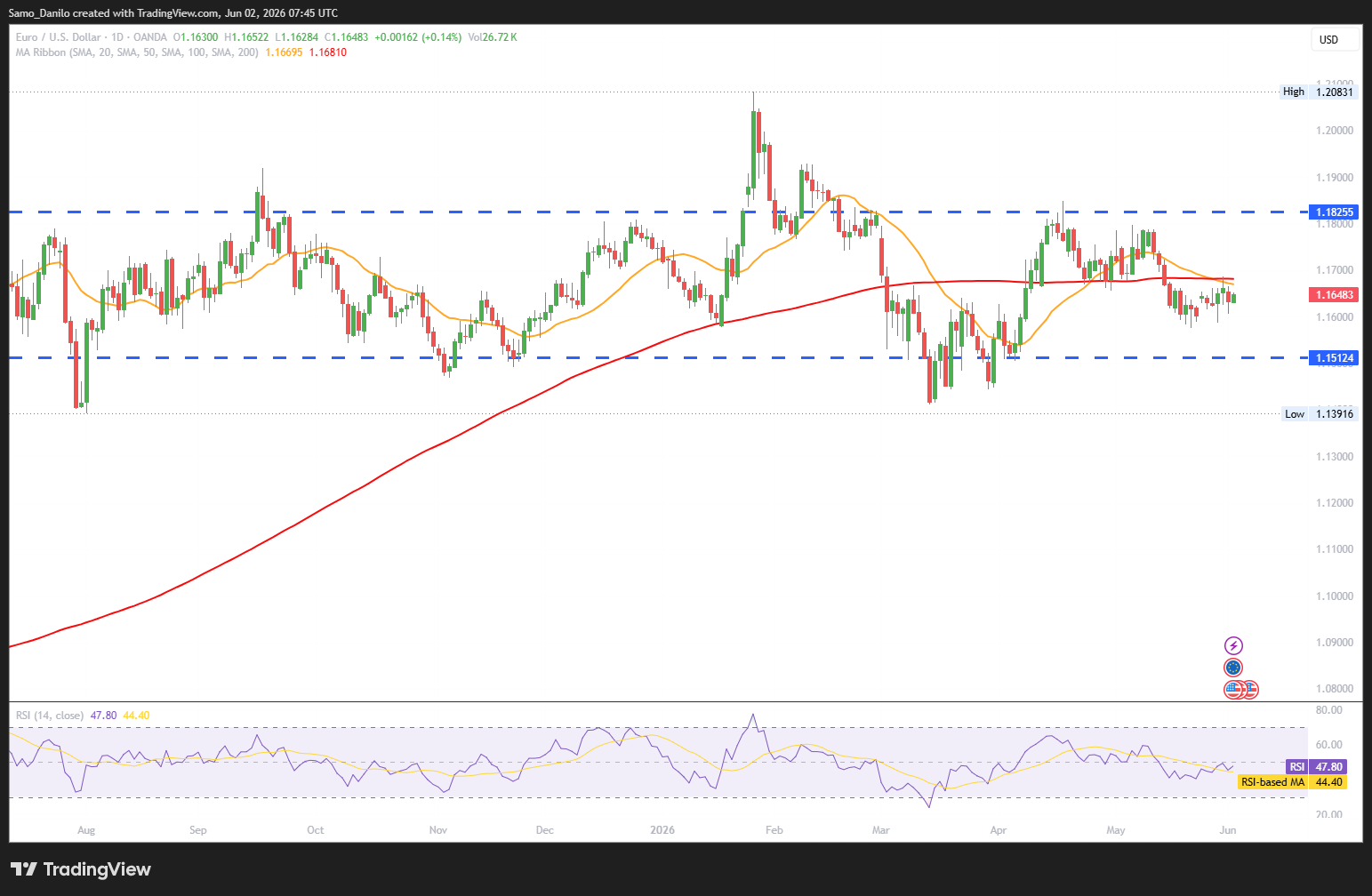
| SMA (20) | Slightly Falling |  |
| RSI (14) | Slightly Falling | |
| MACD (12, 26, 9) | Slightly Falling | |
Closing statement: The fundamental backdrop remains supportive for EUR/USD, driven by stable employment conditions, persistent inflation pressures, and strong expectations for further ECB rate hikes. As long as inflation remains elevated and ECB tightening expectations stay intact, EUR/USD could maintain a bullish bias with potential for further upside.
GBPUSD
- GBP/USD Price: The GBP/USD pair continues to attract buyers after experiencing notable two-way volatility in the previous session. Holding above the 1.3450 level suggests that market participants remain supportive of the pound despite a stronger US economic backdrop.
- Middle East: Iran’s decision to suspend talks over Israel’s actions in Lebanon highlights that geopolitical risks in the region remain elevated. Such developments can increase market uncertainty and boost demand for safe-haven assets, which may periodically support the US dollar and create headwinds for GBP/USD.
- Strait of Hormuz: President Trump’s comments that a deal to reopen the Strait of Hormuz and extend the ceasefire with Iran could be reached within a week have helped ease some concerns about regional disruptions. Improved geopolitical sentiment tends to support risk-sensitive currencies such as the British pound while reducing demand for traditional safe havens.
- US data: The ISM Manufacturing PMI rose to 54.0 in May from 52.7 in April, exceeding market expectations of 53.0. The stronger-than-expected reading points to continued expansion in the US manufacturing sector, reinforcing confidence in the strength of the US economy and providing support for the US dollar.
- Upcoming data: Investors are now focused on the upcoming JOLTS Job Openings report, a closely watched indicator of labor demand. A strong reading would reinforce the view that the US labor market remains healthy, potentially supporting higher interest rate expectations and strengthening the dollar, while a weaker figure could provide support for GBP/USD.
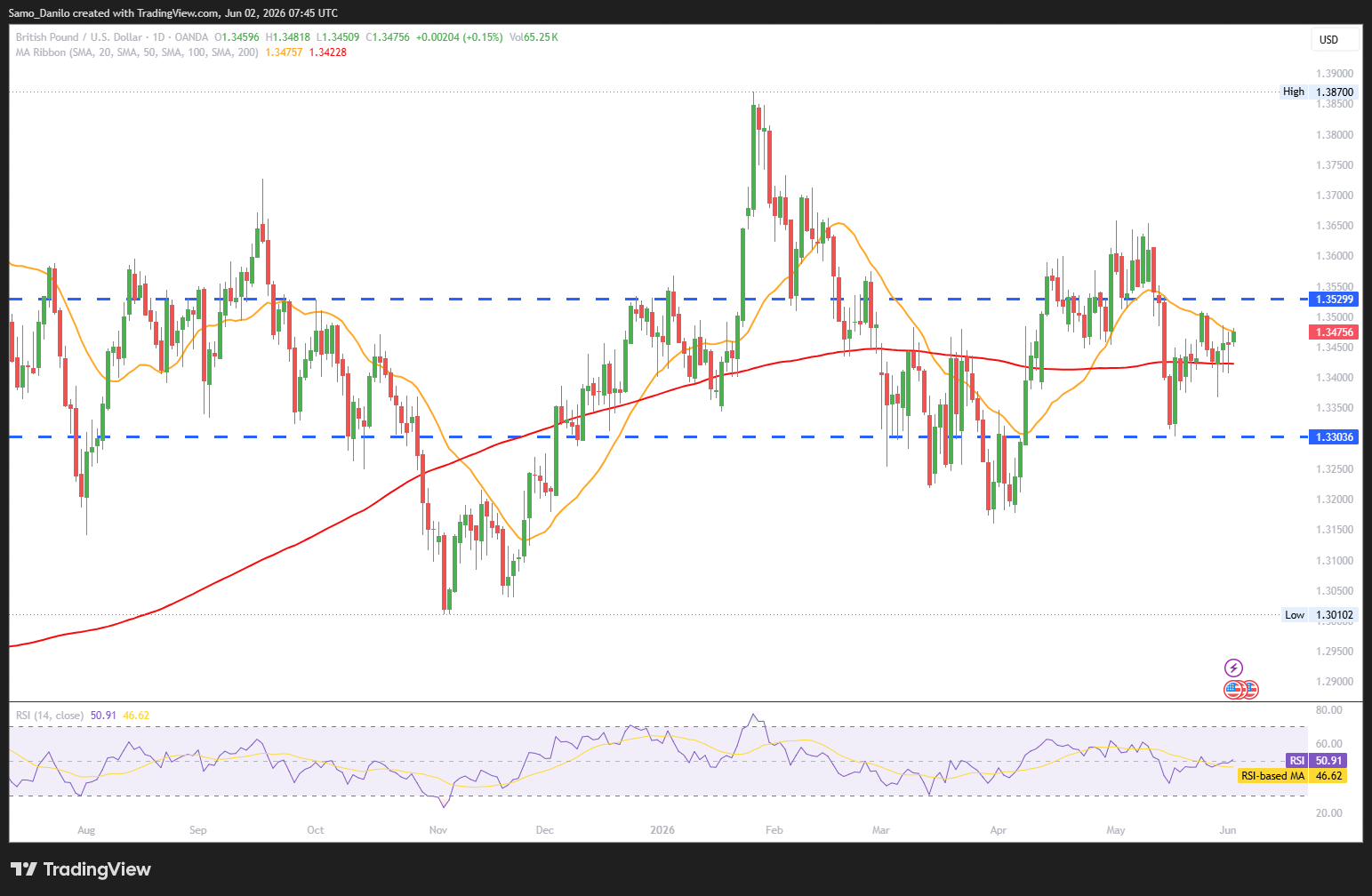
| SMA (20) | Slightly Falling | |
| RSI (14) | Slightly Rising |  |
| MACD (12, 26, 9) | Slightly Rising | |
Closing statement: GBP/USD remains relatively stable as improving risk sentiment offsets support from stronger US economic data. The pair's near-term direction will likely depend on incoming US labor market figures, with stronger employment indicators favoring the dollar and weaker data potentially allowing GBP/USD to extend its gains.
XAUUSD
- XAU/USD Price: Gold is trading slightly above the key psychological level of $4,500 during the European session, indicating that buyers are still present. However, the lack of strong upward follow-through suggests that investors remain cautious and are waiting for fresh catalysts before committing to larger positions.
- US trade: The USTR's decision to impose an additional 25% tariff on most Brazilian imports signals a renewed phase of US trade tensions. Trade disputes tend to increase uncertainty regarding global growth and international commerce, which can boost demand for safe-haven assets such as gold.
- Tariff adjustments: The White House's decision to modify tariffs on steel, aluminum, copper, and agricultural equipment presents a mixed economic picture. While lower tariffs on agricultural equipment may ease some inflationary pressures and support business activity, the broader tariff framework continues to create uncertainty for global trade and supply chains.
- US GDP: The Atlanta Fed revised its Q2 GDP growth estimate downward from 3.8% to 3.0%, suggesting that economic momentum may be moderating. Slower growth expectations can increase speculation about future monetary policy adjustments and enhance gold's appeal as a defensive asset.
- Fed expectations: Analysts at OCBC have become more cautious on gold, lowering their price forecasts due to elevated oil prices, rising bond yields, and a more hawkish Federal Reserve outlook.
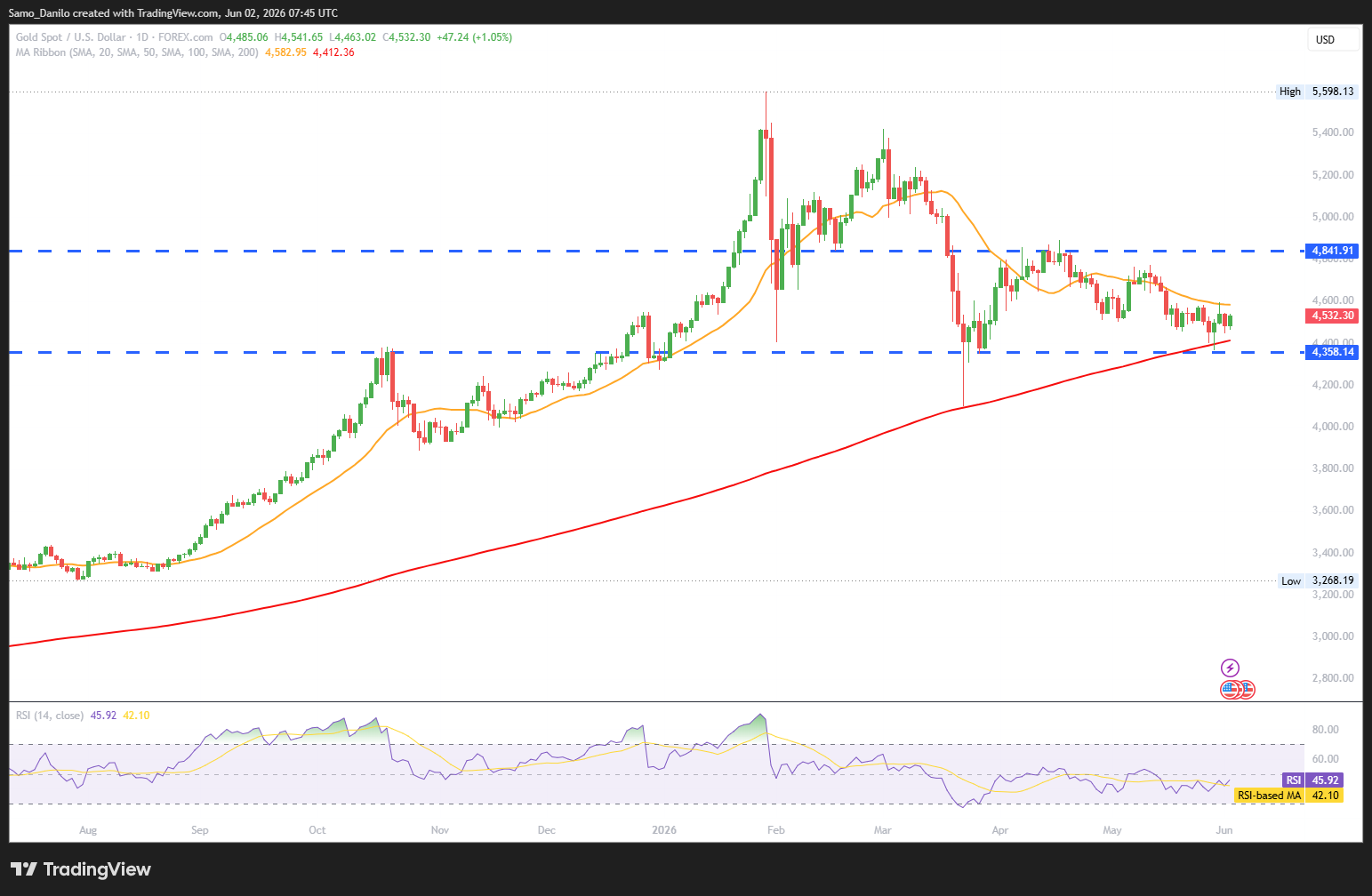
| SMA (20) | Slightly Falling | |
| RSI (14) | Slightly Falling | |
| MACD (12, 26, 9) | Slightly Falling | |
Closing statement: Gold continues to receive support from geopolitical risks, trade tensions, and concerns about slowing economic growth, but higher yields and expectations of a more hawkish Federal Reserve are restraining bullish momentum. In the near term, XAU/USD may remain range-bound, with upside dependent on safe-haven demand and downside risks tied to further increases in yields and dollar strength.
CRUDE OIL
- Crude Oil Price: WTI crude oil is trading around $89.85 during the European session, maintaining levels close to the important $90 threshold.
- OPEC+ production: Several OPEC+ members are reportedly favoring a production increase of approximately 188,000 barrels per day for July, similar to the adjustment implemented for June. While the increase is relatively modest, it signals that producers remain comfortable with gradually returning supply to the market, which could help limit further upside in oil prices.
- Hormuz agreement: President Trump's comments suggesting that an agreement to reopen the Strait of Hormuz and extend the ceasefire with Iran could be reached within the next week have improved market sentiment.
- Lebanon tensions: Israeli Prime Minister Benjamin Netanyahu's commitment to continue operations against Hezbollah in Southern Lebanon highlights that regional tensions remain unresolved. Continued military activity in the region keeps a geopolitical risk premium embedded in oil prices, as traders remain alert to any escalation that could affect energy infrastructure or transportation routes.
- Inventory data: Market participants are awaiting the latest American Petroleum Institute (API) inventory report later today. A larger-than-expected crude stock draw would signal strong demand and potentially support higher oil prices, while an unexpected inventory build could increase concerns about supply-demand balance and weigh on the market.
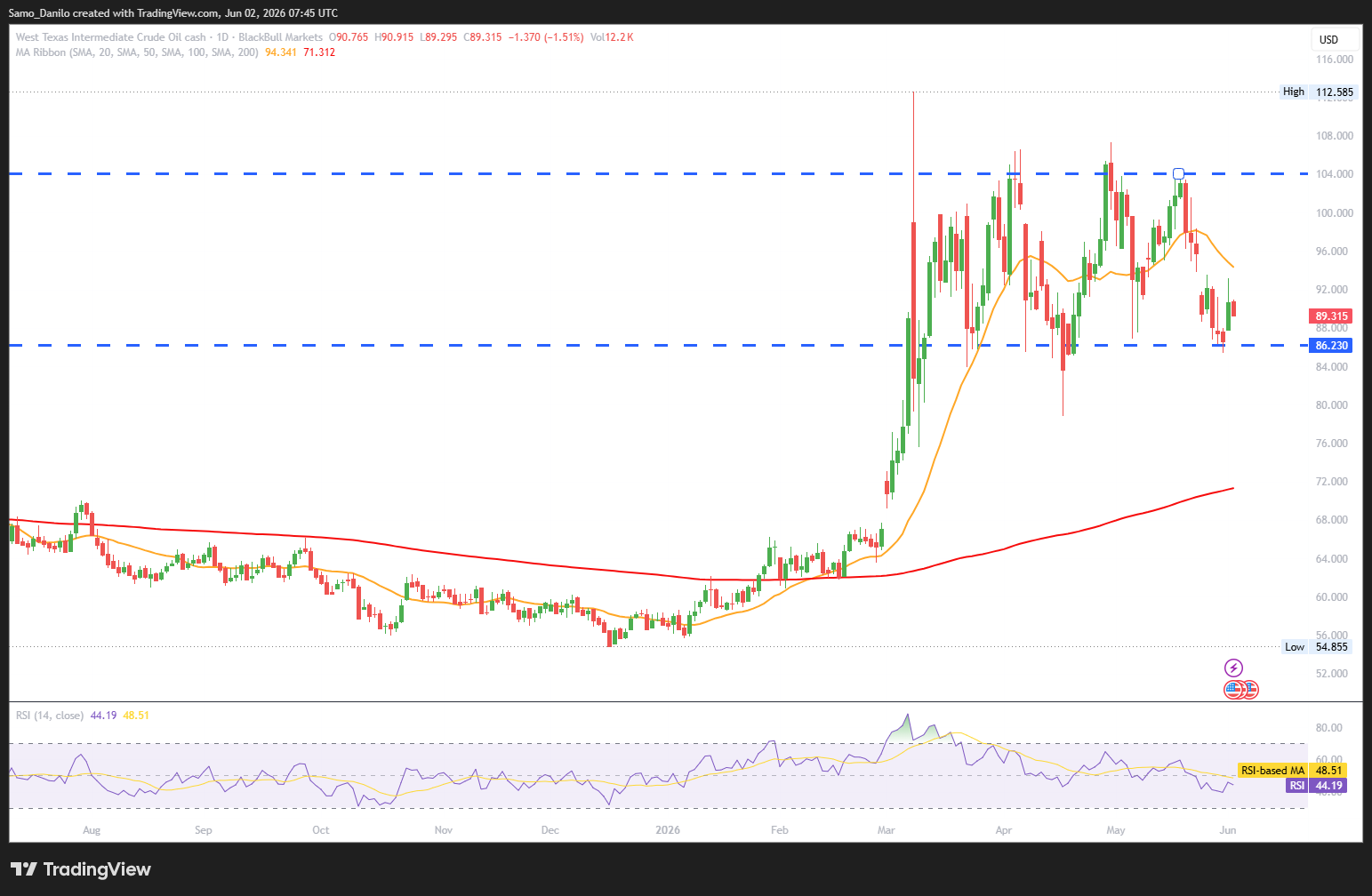
| SMA (20) | Slightly Falling | |
| RSI (14) | Slightly Falling | |
| MACD (12, 26, 9) | Slightly Falling | |
Closing statement: WTI remains supported by persistent geopolitical risks and concerns over Middle East stability, keeping prices close to $90 per barrel. However, expectations of additional OPEC+ supply and hopes for a diplomatic breakthrough involving the Strait of Hormuz could limit further gains, making upcoming inventory data a key catalyst for near-term price direction.
DAX
- DAX 40 Price: The DAX 40 is trading around 25,240 points during Tuesday's European session, continuing its positive momentum. Investor sentiment remains constructive as market participants focus on improving corporate prospects and a relatively stable macroeconomic environment in the Eurozone.
- Inflation expectations: The ECB's consumer survey revealed that medium-term inflation expectations eased slightly, with the three-year median expectation falling to 2.9% from 3.0%, while one-year expectations remained at 4.0%. Stabilizing inflation expectations may reassure investors that inflation pressures are becoming more manageable, potentially reducing the need for aggressive monetary tightening.
- DHL news: Shares of DHL surged after receiving a buy recommendation from Kepler Cheuvreux, reaching their highest level since 2022. As one of Germany's major listed companies, the strong performance of DHL contributes positively to overall DAX sentiment and reflects growing confidence in the company's earnings outlook.
- Infineon rating: Jefferies raised its target price for Infineon from €75 to €96 while maintaining a Buy recommendation. The upgrade highlights growing confidence in the semiconductor sector and supports broader optimism toward technology-related stocks, which continue to play an important role within the German equity market.
- Aerospace industry: Norsk Titanium's new cooperation agreement with Airbus to advance titanium component manufacturing technology underscores continued investment and innovation within the European aerospace sector.
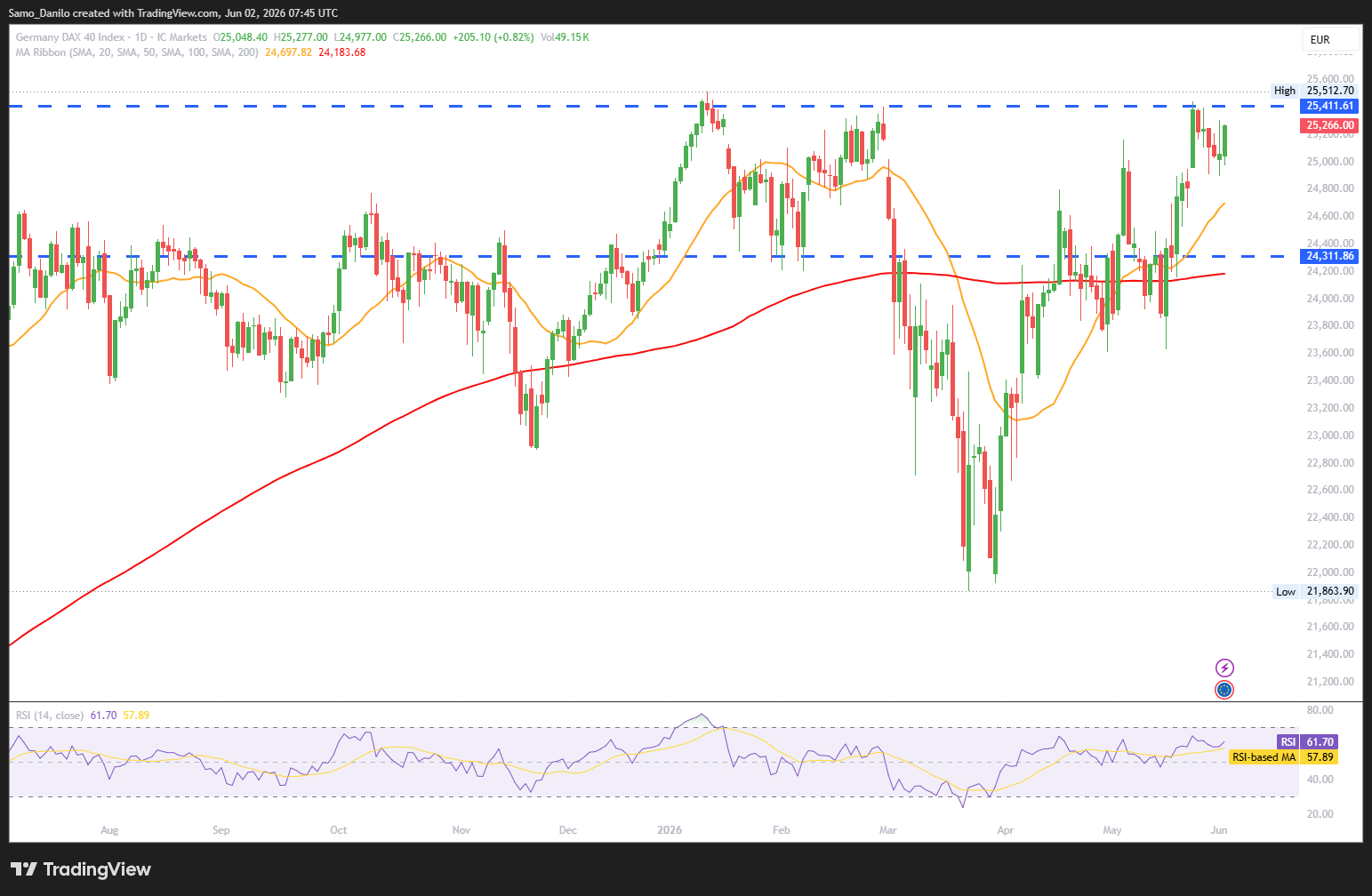
| SMA (20) | Rising | | |
| RSI (14) | Rising | | |
| MACD (12, 26, 9) | Rising | | |
Closing statement: The DAX remains supported by stabilizing inflation expectations, positive analyst sentiment, and strong company-specific developments across logistics, technology, and industrial sectors. While macroeconomic conditions remain important, the current backdrop favors a constructive outlook, with the index maintaining a bullish bias as long as corporate earnings expectations and investor confidence remain strong.