
EURUSD
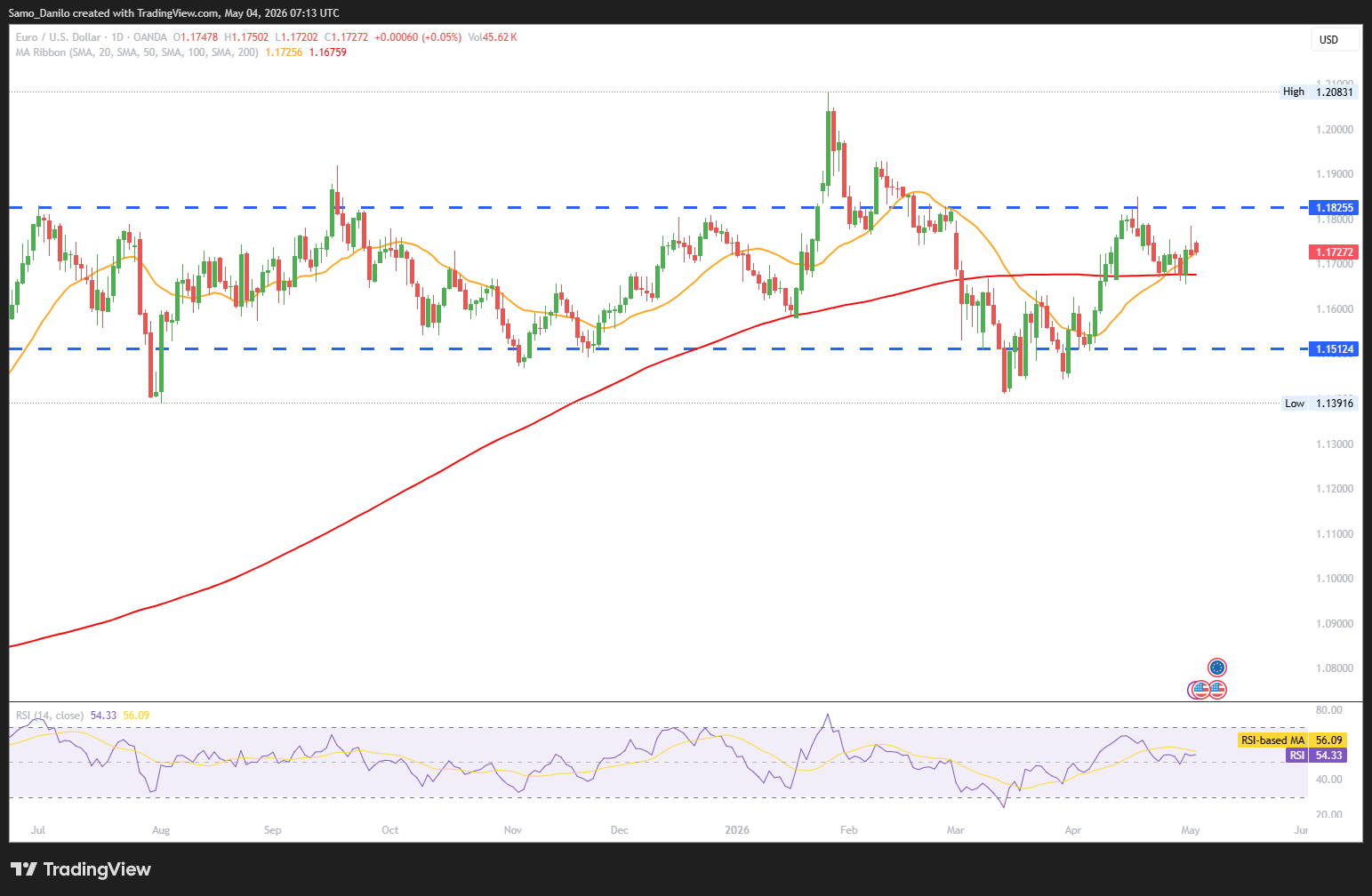
- EUR/USD Price: EUR/USD faced selling pressure after a modest rise to the mid-1.1700s, filling a significant portion of its bullish gap. This suggests that upside momentum is limited, with sellers stepping in at higher levels.
- EU-US trade: Donald Trump warned of higher tariffs on EU-made vehicles unless production shifts to the United States. This introduces renewed trade tensions, which could weigh on the euro.
- EU Pushback: The European Commission rejected US claims and pledged to defend EU interests if agreements are violated. This increases the risk of escalation into a broader trade dispute.
- ECB's Wunsch: Pierre Wunsch criticized Europe for relying on an outdated economic model. Such remarks highlight deeper structural concerns that could affect long-term euro sentiment.
- US-Cuba: President Trump also said over the weekend that “the US will be taking over Cuba ”almost immediately“, adding that a US aircraft carrier could be positioned offshore after the conflict in Iran."
| SMA (20) | Rising |  | |
| RSI (14) | Rising | | |
| MACD (12, 26, 9) | Slightly Rising | |
Closing statement: EUR/USD is under pressure as trade tensions and geopolitical risks rise, compounded by structural concerns in the Eurozone. The near-term outlook is bearish, with limited upside unless risk sentiment improves and tensions ease.
GBPUSD
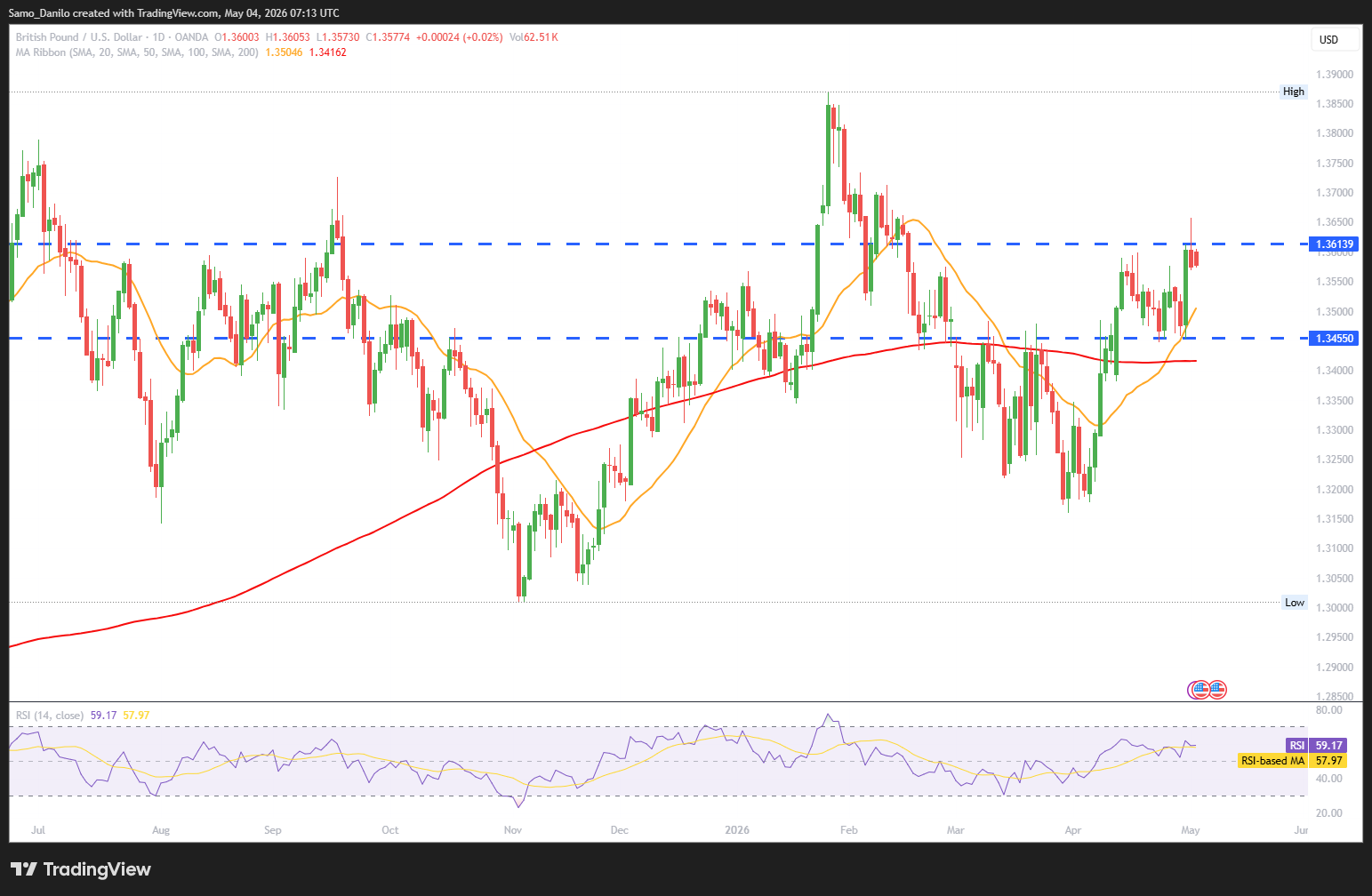
- GBP/USD Price: GBP/USD is gaining traction around the 1.3600 level in early European trading. This upward move suggests improving short-term sentiment, with buyers regaining control after recent consolidation.
- CB rates: Last week, both the Bank of England (BoE) and the US Federal Reserve maintained current interest rates. BoE Governor Andrew Bailey said if price pressures triggered by the conflict proved to be severe, a “forceful tightening” would be required.
- US-Iran negotiations: Markets wobbled a little on Friday when Pres Trump said that was not satisfied with Iran’s new proposal and that negotiations “are not getting there”. Trump then posted at midnight on Saturday night that he will “soon be reviewing the plan that Iran has just sent to us but can’t imagine that it would be acceptable”.
- EU-UK cooperation: President Von der Leyen and UK PM Starmer are set to begin discussions on a €90B loan scheme for Ukraine. This cooperation may support regional stability and investor confidence.
- Oil routes: The United Kingdom Maritime Trade Operations warned that the Strait of Hormuz remains at a critical threat level. Ongoing military activity continues to pose risks to global trade and energy markets.
| SMA (20) | Rising | | |
| RSI (14) | Rising | | |
| MACD (12, 26, 9) | Rising | | |
Closing statement: GBP/USD is showing short-term strength, supported by stable monetary policy and improving sentiment. However, geopolitical uncertainty and inflation risks keep the outlook cautiously bullish, with volatility likely to persist.
XAUUSD
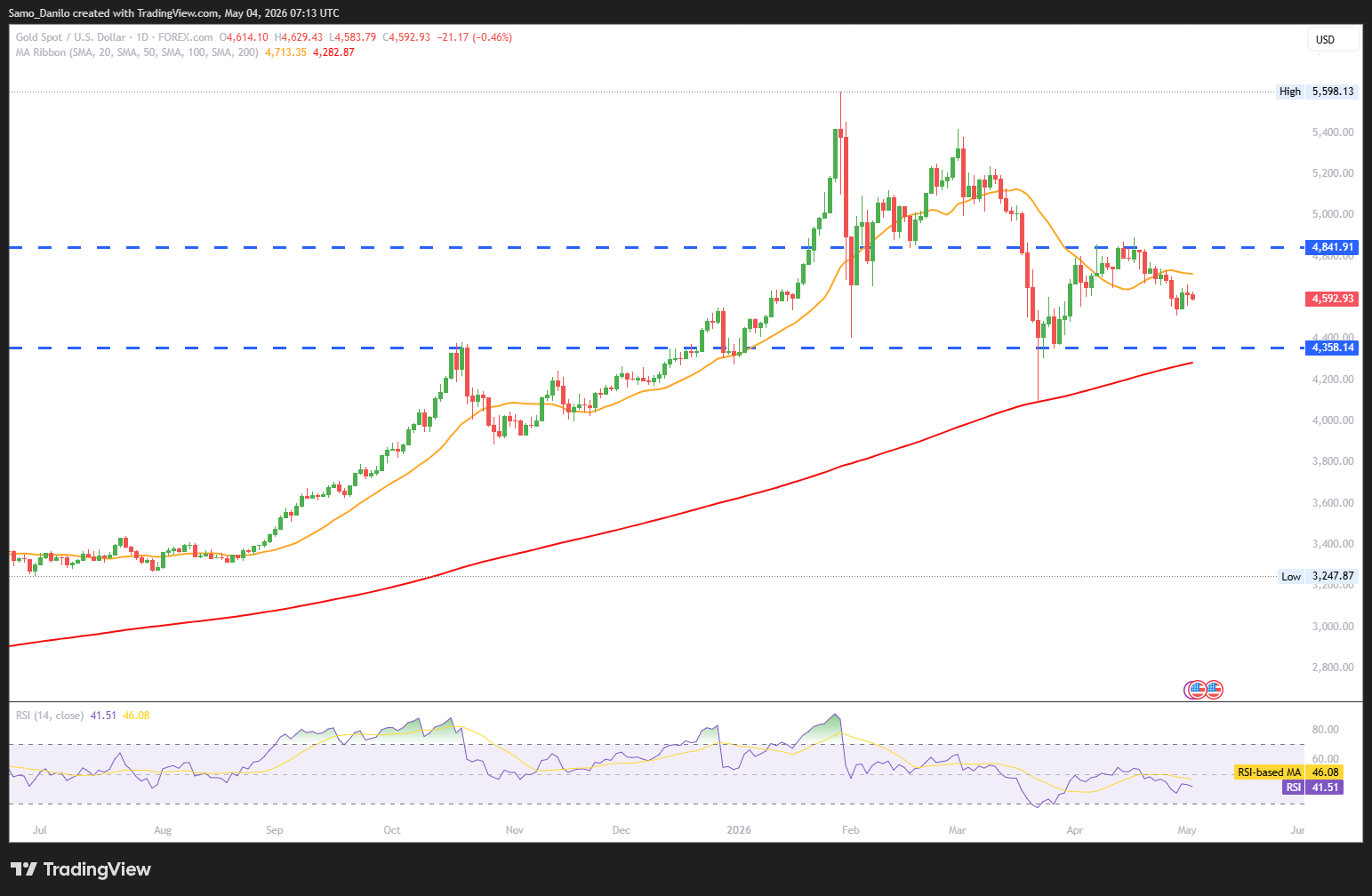
- XAU/USD Price: Gold is facing some selling during the European session, slipping below $4,600 but holding relatively firm. The lack of strong bearish follow-through suggests that buyers are still present at lower levels.
- Fed's Kashkari: Neel Kashkari warned that a prolonged Iran conflict could raise inflation risks and even justify higher interest rates. This introduces a more hawkish tone to monetary policy expectations.
- Crypto markets: US lawmakers, including Thom Tillis, reached a compromise on the Clarity Act, improving its chances of passing. While not directly tied to gold, evolving crypto regulation may influence broader investment flows.
- AI sector: Anthropic secured a major $1.5B joint venture with firms such as Goldman Sachs and Blackstone. This reflects continued capital allocation toward high-growth sectors, potentially diverting flows from safe-haven assets.
- Upcoming data: Markets are closely watching upcoming US macro releases, particularly the Nonfarm Payrolls report. These data points are expected to provide clearer direction for monetary policy expectations.
| SMA (20) | Slightly Rising | |
| RSI (14) | Slightly Falling |  |
| MACD (12, 26, 9) | Slightly Falling | |
Closing statement: Gold remains under mild pressure amid hawkish Fed signals and strong risk sentiment, though it shows resilience at lower levels. The near-term outlook is neutral to slightly bearish, with key US data likely to determine the next directional move.
CRUDE OIL
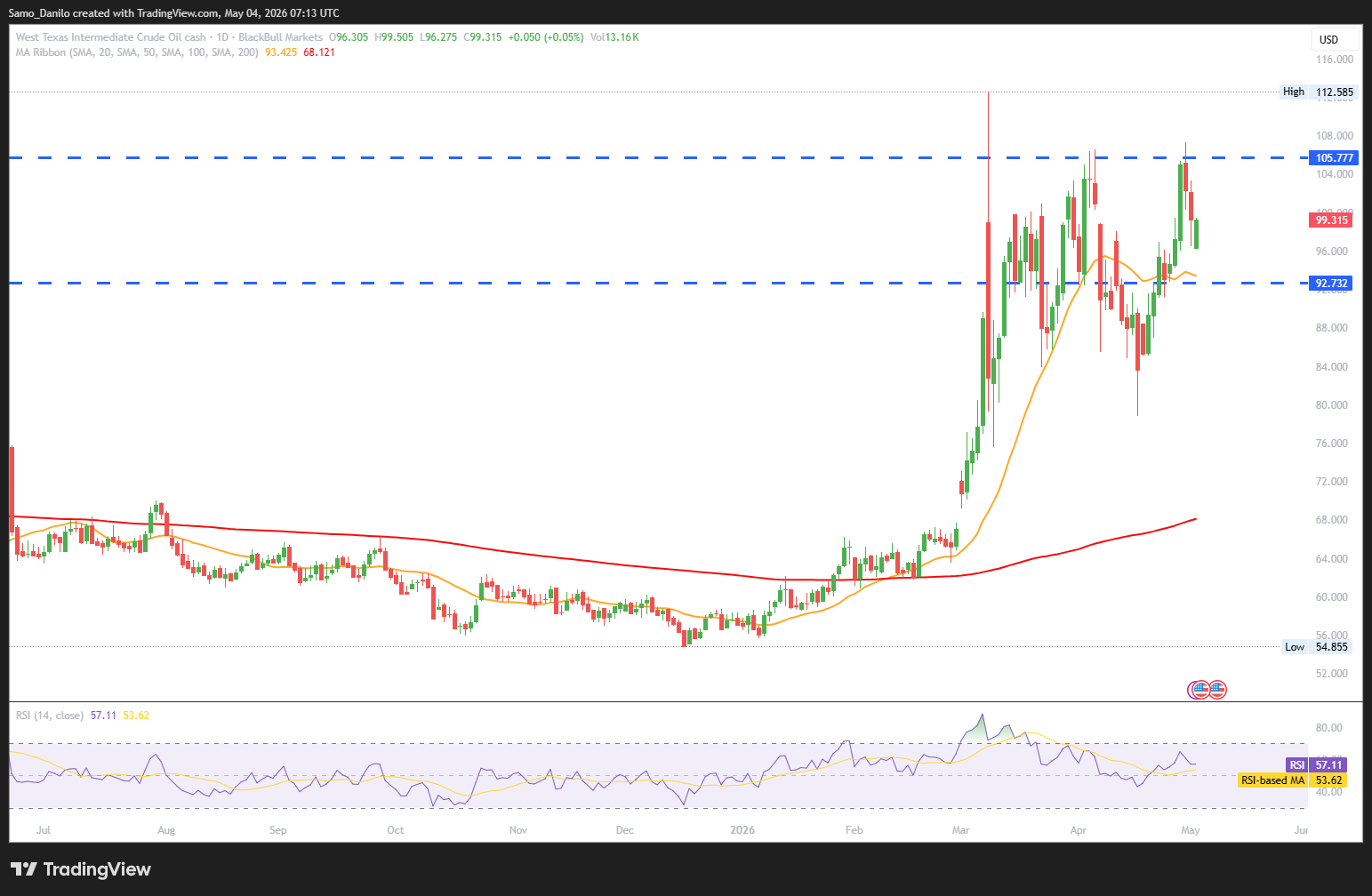
- Crude Oil Price: WTI is trading around $99 after rebounding from a bearish gap near $96.45, holding close to recent highs. This suggests strong bullish positioning, with only modest intraday selling pressure despite elevated price levels.
- Strait of Hormuz: Bloomberg reported on Sunday that Donald Trump said the United States will begin guiding some neutral ships trapped in the Persian Gulf out through the Strait of Hormuz starting Monday.
- IRGC statement: Ebrahim Azizi, a former commander in Iran’s Islamic Revolutionary Guards Corps (IRGC) and current head of the parliamentary National Security and Foreign Policy Committee, said that any US interference in the new maritime regime of the Strait of Hormuz would be considered a violation of the ceasefire.
- OPEC+ decision: The Organization of the Petroleum Exporting Countries and its allies, or OPEC+, agreed to increase oil output for the third consecutive month, by 188,000 barrels per day in June for seven members.
- Venezuela’s oil: Venezuela increased oil exports to 1.23 million barrels per day in April, the highest since 2018. This reflects a partial offset to global supply shortages as shipments to major markets accelerate.
| SMA (20) | Rising | | |
| RSI (14) | Rising | | |
| MACD (12, 26, 9) | Rising | | |
Closing statement: Crude oil remains strongly supported near highs, driven by geopolitical tensions and constrained supply, despite symbolic output increases from OPEC+. The outlook stays bullish, with prices likely to remain elevated unless meaningful improvements in supply routes or diplomacy emerge.
DAX
- DAX 40 Price: The DAX is set to open higher, supported by strong corporate earnings that previously pushed the index up 1.4% to around 24,325 points. This indicates that company performance is currently a key driver of market optimism.
- Eurozone data: Recent GDP data showed both the EU and Eurozone expanding by just 0.1% quarter-on-quarter, missing expectations. This slowdown signals weakening economic momentum compared to the previous quarter.
- ECB signals: Yannis Stournaras raised concerns about recession risks, while Olli Rehn emphasized the need for rapid action if inflation pressures persist. These comments highlight increasing uncertainty around monetary policy.
- US manufacturing: The US ISM manufacturing index remained in expansion territory at 52.7, indicating continued growth. However, underlying weaknesses such as contracting employment and supply chain issues suggest fragility beneath the surface.
- Data ahead: Markets are awaiting the Eurozone Sentix investor sentiment index and final PMI data. These releases will provide further insight into economic conditions and investor confidence in the region.
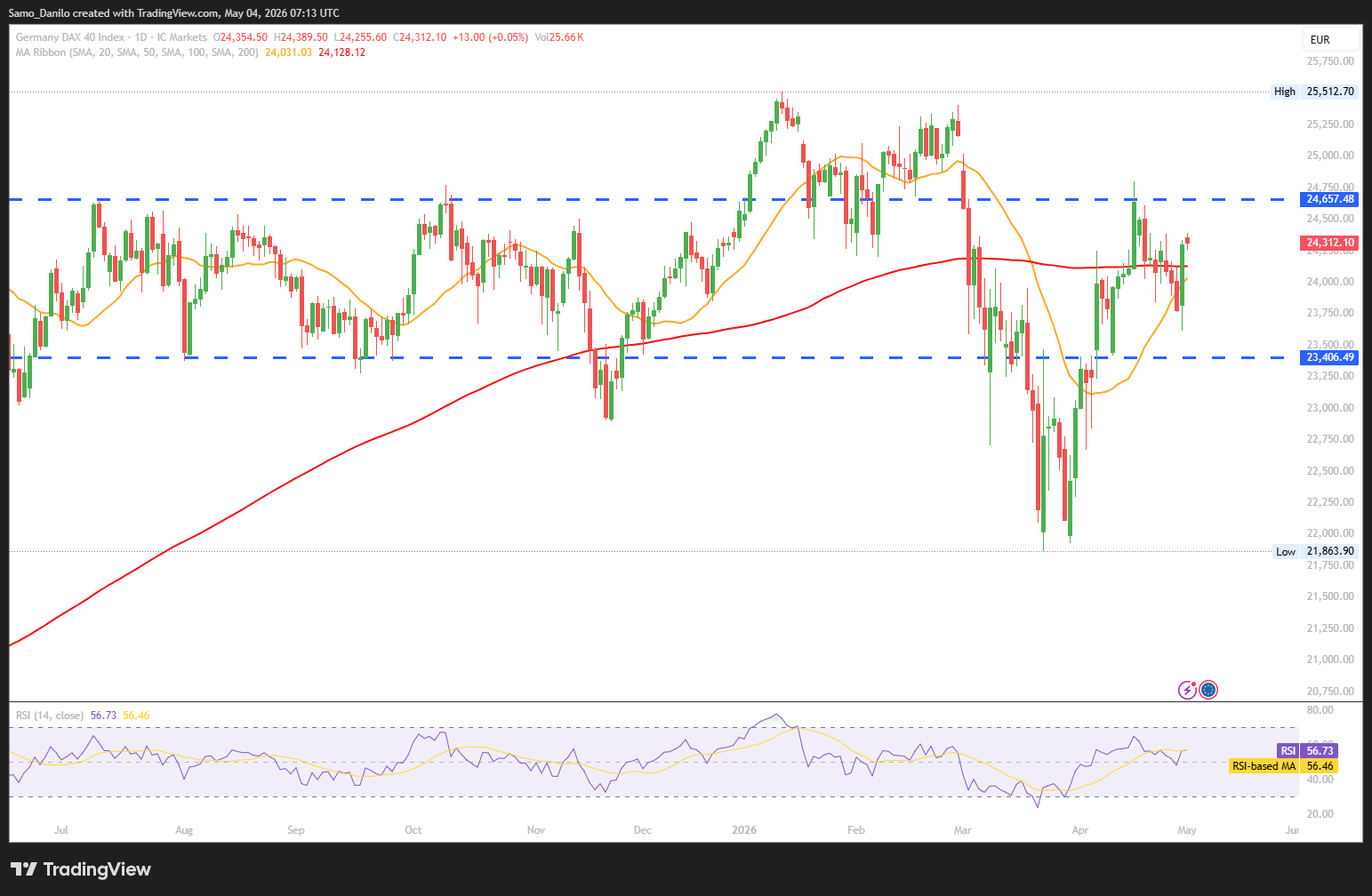
| SMA (20) | Rising | | |
| RSI (14) | Rising | | |
| MACD (12, 26, 9) | Rising | | |
Closing statement: The DAX is benefiting from strong corporate earnings, but slowing economic growth and rising policy uncertainty limit upside potential. The near-term outlook remains cautiously positive, with attention on upcoming data to confirm direction.