
EURUSD
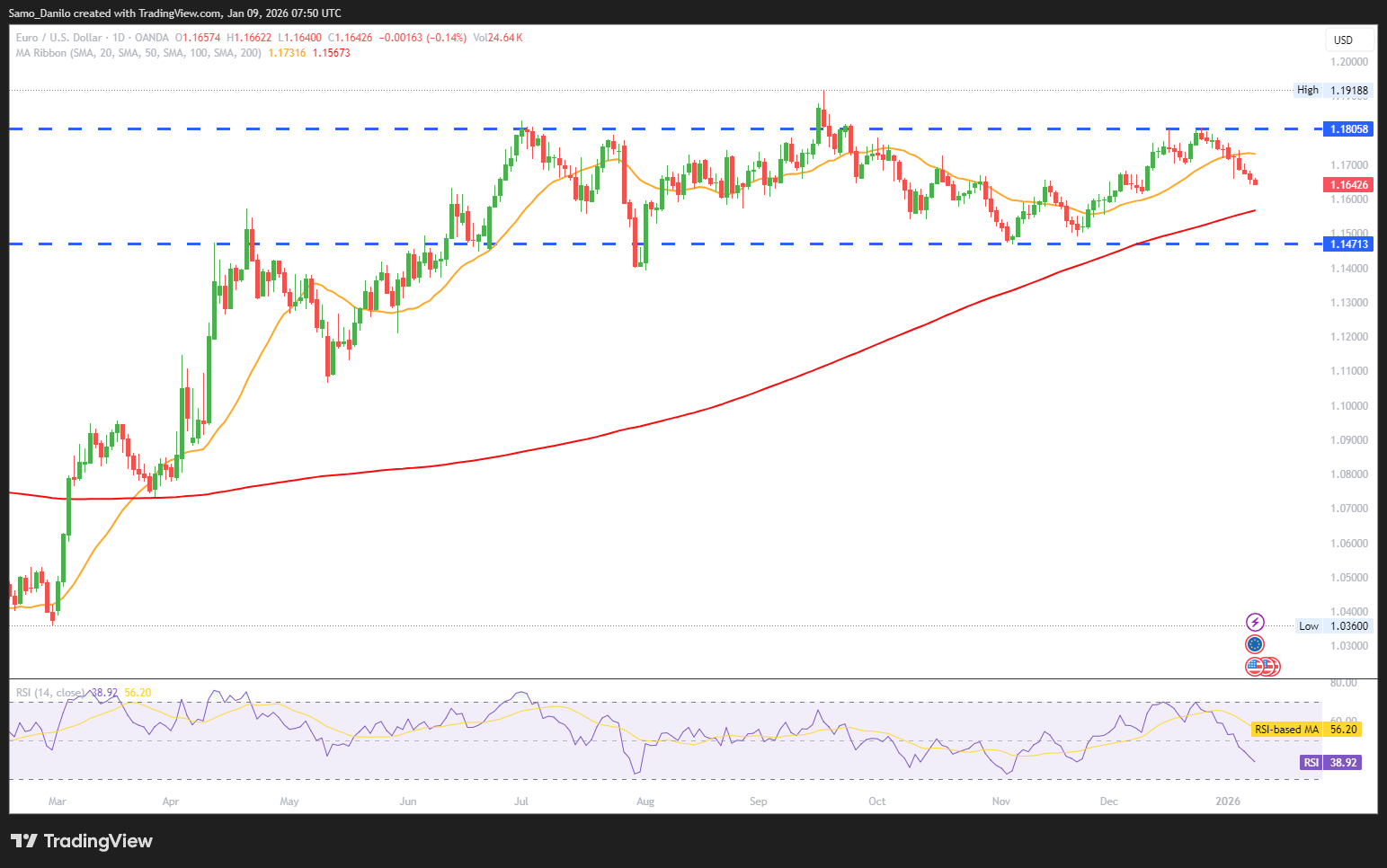
- EUR/USD Price: EUR/USD is attempting to stabilize after five consecutive losing sessions, holding near 1.1650, suggesting selling pressure may be easing in the near term.
- Business Improvement: The Eurozone Business Climate Index improved to -0.56, pointing to tentative stabilization in corporate conditions, though still consistent with below-trend activity.
- Mixed Sentiment: Consumer Confidence strengthened to -13.1, signaling improving household morale, while the Economic Sentiment Indicator slipped slightly to 96.7, highlighting uneven recovery dynamics.
- Labor Support: The Eurozone unemployment rate edged down to 6.3%, reinforcing the view that the labor market remains resilient despite sluggish growth.
- ECB Steadiness: ECB Vice President de Guindos described current interest rates as “appropriate,” confirming a wait-and-see stance with inflation at target but uncertainty still elevated.
| SMA (20) | Slightly Rising |  |
|
| RSI (14) | Falling |  | |
| MACD (12, 26, 9) | Slightly Rising | |
Closing statement: EUR/USD appears to be forming a short-term base after a prolonged decline. Sustained stabilization above 1.1600 could allow for a corrective rebound toward the 1.1700–1.1750 zone, though broader upside may remain capped unless US Dollar momentum fades or Eurozone data continue to improve.
GBPUSD
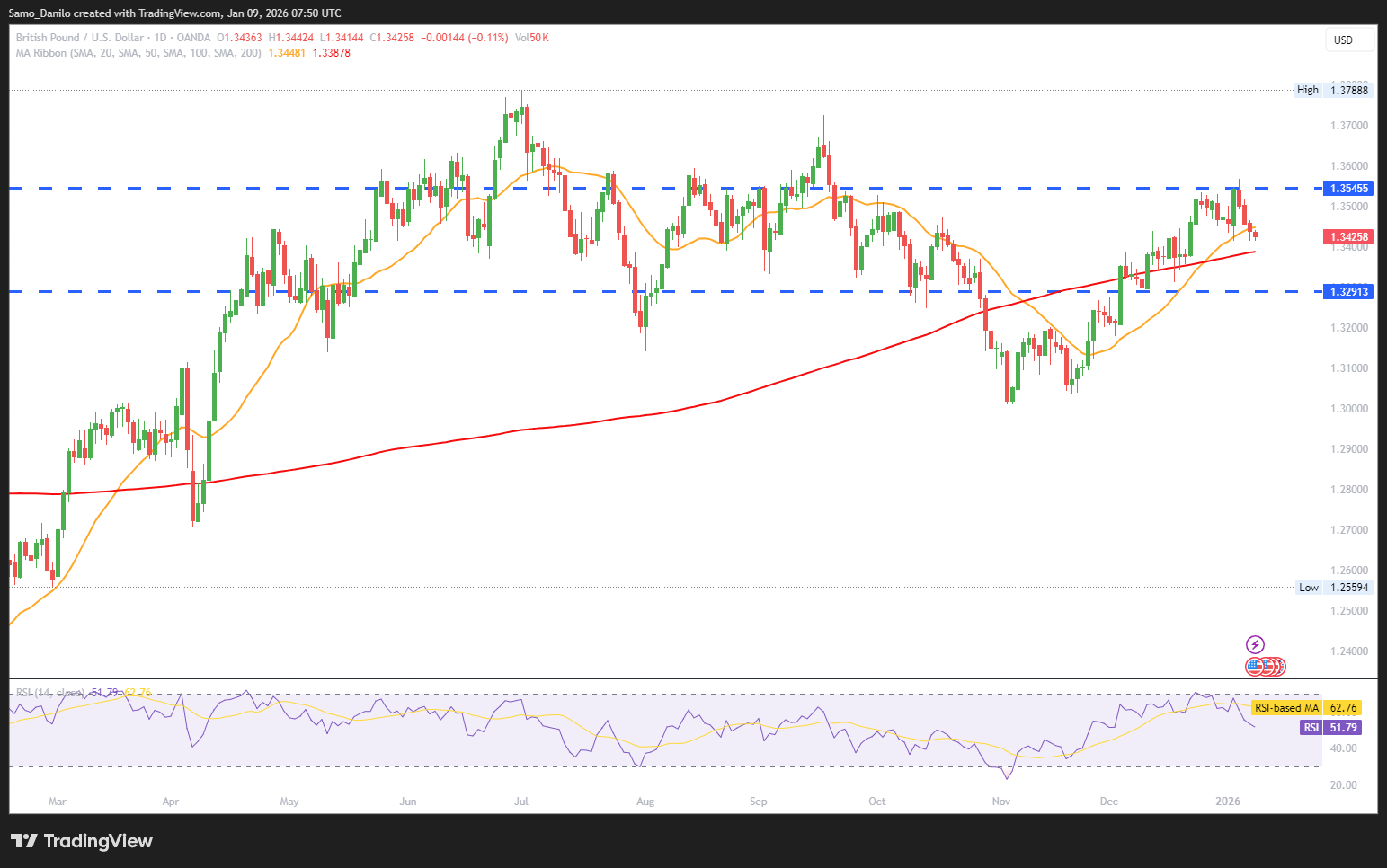
- GBP/USD Price: GBP/USD remains under mild pressure for a fourth straight session, hovering near 1.3425, as traders stay cautious ahead of key US data.
- BoE Support: The Bank of England’s less dovish tone, signaling rates are approaching neutral, continues to provide underlying support to Sterling and helps limit downside risks.
- UK Outperformance: UK equities have been standout performers, with the FTSE 100 outperforming US benchmarks in 2025, while UK banks have significantly outpaced the so-called Magnificent Seven, reinforcing confidence in UK assets.
- Tariff Uncertainty: Market attention turns to the US Supreme Court, which is expected to rule on Trump-era tariffs, a decision that could have broad implications for trade-sensitive sectors and risk sentiment.
- NFP Caution: Traders remain sidelined ahead of the US Nonfarm Payrolls report, which could reshape expectations for the Fed’s policy path and drive near-term volatility in the pair.
| SMA (20) | Rising | | |
| RSI (14) | Falling | | |
| MACD (12, 26, 9) | Slightly Rising | |
Closing statement: GBP/USD appears to be consolidating rather than reversing, with BoE support helping to anchor the pair above 1.3350–1.3400. A strong US jobs report could renew downside pressure, while softer labor data may allow Sterling to retest the 1.3500 area in the near term.
XAUUSD
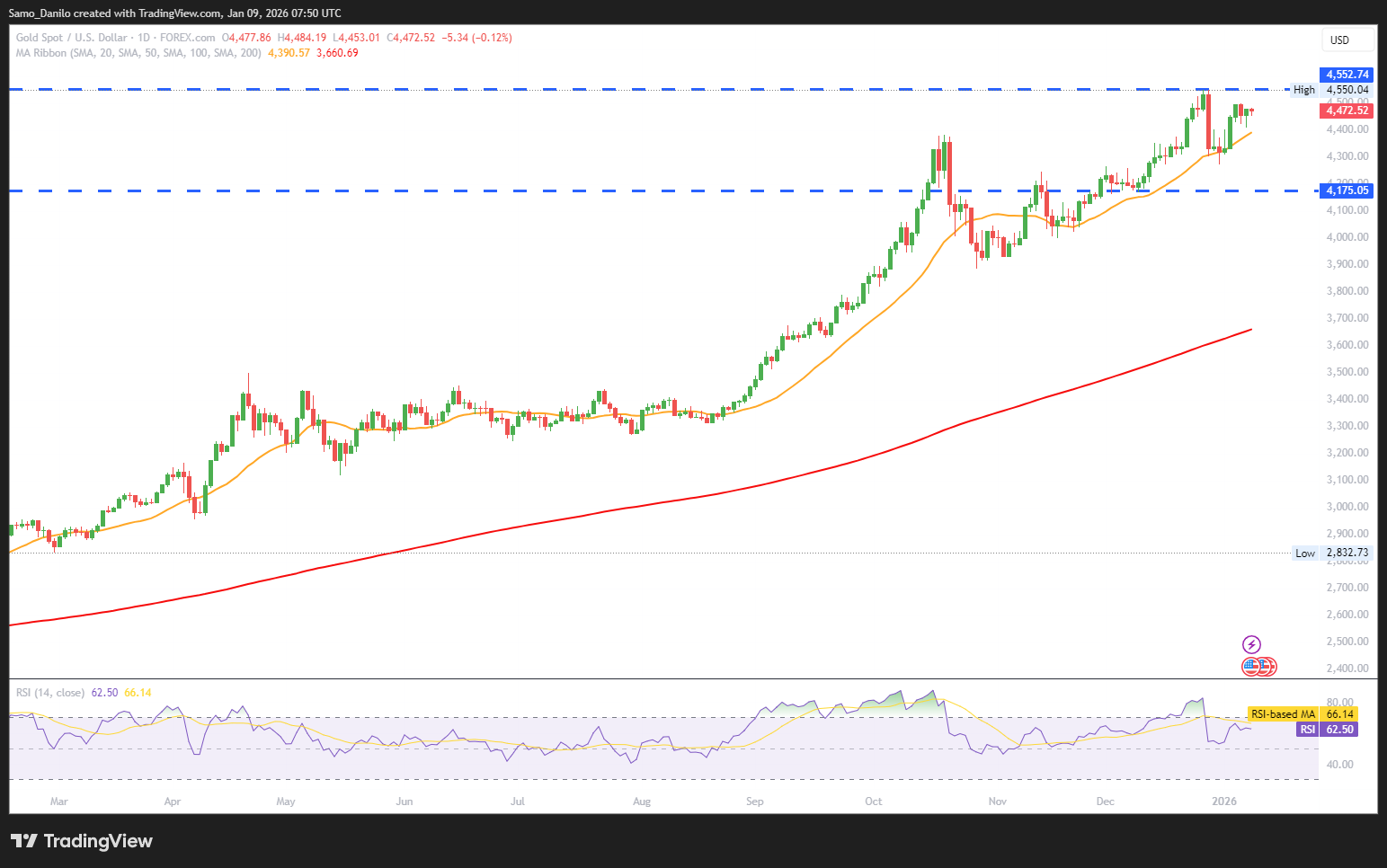
- XAU/USD Price: Gold fails to build on the prior rebound from the $4,400 area and attracts renewed selling pressure during the European session. The inability to sustain upside momentum suggests near-term profit-taking and fading safe-haven demand.
- Rate Pressure: US Treasury Secretary Scott Bessent openly argued that lower interest rates are the missing catalyst for stronger growth, increasing pressure on the Fed to ease policy. Such rhetoric reinforces expectations of eventual rate cuts, which is structurally supportive for Gold, though not yet reflected in price action.
- Fiscal Risk: The Trump administration has reportedly collected $133bn in emergency tariffs, raising legal and fiscal uncertainty. The risk of forced repayments, described by Trump as a “national security catastrophe,” adds longer-term instability that could underpin safe-haven assets.
- Jobs Focus: US labor data expectations remain modest, with December job growth projected at 60K and unemployment edging down to 4.5%. A weaker-than-expected outcome would strengthen rate-cut bets and could quickly revive demand for non-yielding Gold.
- Asia Tensions: China escalated its dispute with Japan by restricting rare earth exports, highlighting rising geopolitical and supply-chain risks in Asia. These tensions provide underlying support for Gold despite short-term corrective pressure.
| SMA (20) | Rising | | |
| RSI (14) | Rising | | |
| MACD (12, 26, 9) | Slightly Rising | |
Closing statement: XAU/USD is showing signs of near-term consolidation below $4,450, as markets await confirmation from US labor data. A soft NFP print or renewed geopolitical escalation could trigger another push toward record highs, while stronger US data may extend a corrective pullback toward the $4,350–4,380 zone.
CRUDE OIL
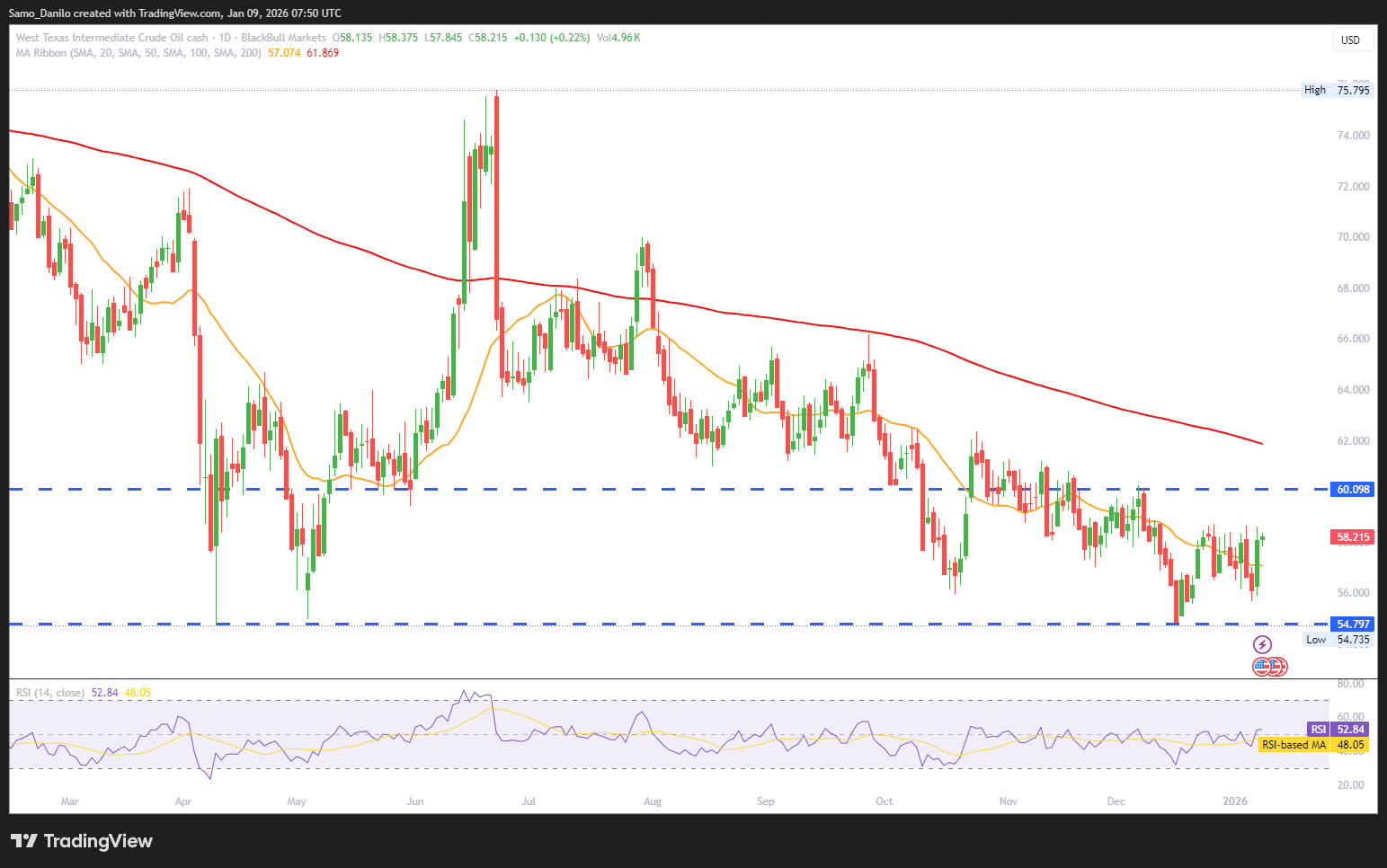
- Crude Oil Price: WTI holds near $58.20 after posting gains of over 4% in the previous session, signaling short-term consolidation following a sharp rebound. The pause suggests markets are reassessing supply risks after recent bullish momentum.
- Venezuela Supply: Major oil firms and trading houses are competing for US government-backed deals to export up to 50 million barrels of Venezuelan crude. While this raises near-term supply expectations, ongoing negotiations and infrastructure constraints limit immediate downside pressure.
- Geopolitical Risk: Heightened geopolitical rhetoric involving Iran, Venezuela, and Greenland keeps a risk premium embedded in oil prices. Traders remain sensitive to any escalation that could disrupt supply routes or provoke sanctions-related responses.
- Venezuela Strategy: President Trump’s remarks about the US potentially running Venezuela’s oil operations for years point to a structural shift in control over future output. This adds longer-term uncertainty rather than immediate supply relief, supporting price stability.
- Russia Sanctions: Approval to move forward with a strengthened Russia sanctions bill raises the prospect of penalizing buyers of discounted Russian oil. Targeting major importers such as China and India could materially tighten global supply flows if enforced.
| SMA (20) | Slightly Falling | |
| RSI (14) | Slightly Rising | |
| MACD (12, 26, 9) | Slightly Falling | |
Closing statement: WTI is likely to remain supported above the mid-$57 range as geopolitical and sanctions risks offset expectations of higher Venezuelan supply. Sustained upside toward $60 would require escalation in sanctions or regional tensions, while concrete increases in physical supply could cap gains in the near term.
DAX
- DAX Price: The DAX edged lower and is currently trading at around 25,130, reflecting cautious sentiment after recent record highs. The marginal gain suggests investors are consolidating positions rather than adding fresh risk.
- Producer Prices: Eurozone PPI rose by 0.5% MoM in November, significantly above expectations. While this points to upstream cost pressures, markets appear comfortable that it does not yet threaten the broader disinflation trend.
- ECB Policy: The ECB’s consumer inflation expectations survey shows stable expectations across 1-, 3-, and 5-year horizons. This reinforces the view that inflation is anchoring near target and allows the ECB to stay on hold, providing a supportive policy environment for equities.
- Geopolitical News: Comments from German Chancellor Merz highlighting the prolonged outlook for the Ukraine war and opposing European troop deployment add to geopolitical uncertainty. This caps upside momentum, particularly for cyclically sensitive German stocks.
- Energy Supply: The EU’s agreement to end Russian gas imports by 2027 marks a structural change in energy sourcing. While positive for long-term energy security, it raises near-term cost and transition risks for energy-intensive industries.
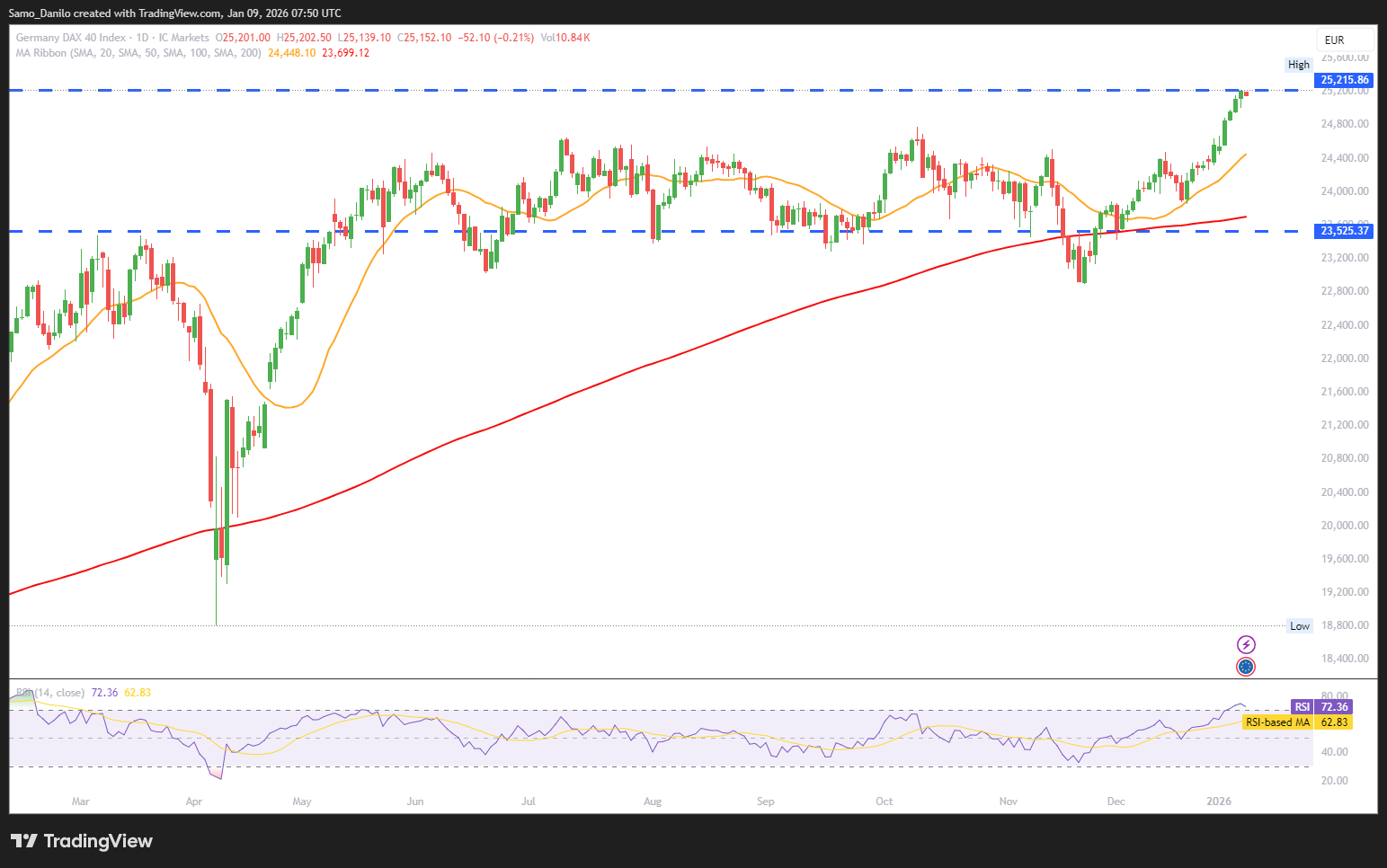
| SMA (20) | Rising | | |
| RSI (14) | Rising | | |
| MACD (12, 26, 9) | Rising | | |
Closing statement: The DAX is likely to remain range-bound near record levels, supported by stable ECB policy expectations but constrained by geopolitical risks and energy transition uncertainties. A sustained breakout higher would require clearer geopolitical de-escalation or stronger growth signals, while downside appears limited unless energy costs or geopolitical tensions intensify.