
EURUSD
- EUR/USD Price: The EUR/USD pair has rebounded towards 1.0985 after touching 19-month lows near 1.0950. Despite the recovery, the pair remains on track for a 0.3% weekly decline and has lost approximately 2% over the past four weeks.
- Energy exports: US Energy Secretary Chris Wright said that Washington is considering increasing diesel and oil exports to Europe. The comments were made at the P-TEC conference in Warsaw, highlighting the potential for closer US-European energy cooperation.
- Labour market: US Initial Jobless Claims came in at 203K, above the expected 198K, while Continuing Claims increased to 1.76 million against expectations of 1.70 million.
- Fed commentary: Philadelphia Fed President Anna Paulson reiterated on Friday that further monetary tightening is needed.
- Wage growth: The ECB is scheduled to release its negotiated wage growth data for the third quarter, providing an early indication of wage pressures across the euro area. Expectations point to a slight increase in negotiated wages to 2.6% year-on-year from 2.4% in the second quarter, which could influence the ECB's assessment of underlying inflation pressures.
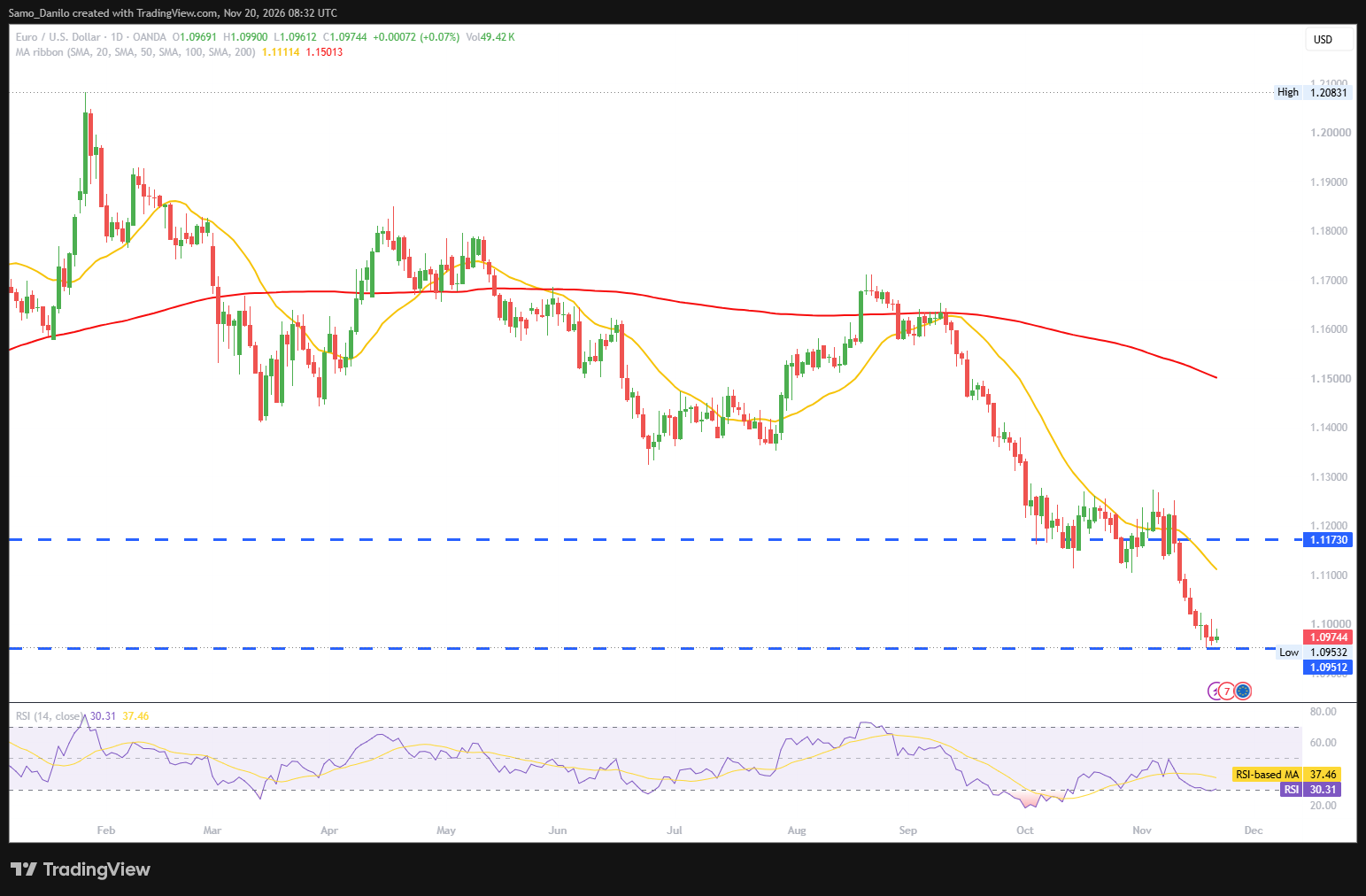
| SMA (20) | Falling |  | |
| RSI (14) | Falling | | |
| MACD (12, 26, 9) | Falling | | |
Closing statement: EUR/USD has staged a modest recovery towards 1.0985, but the broader trend remains bearish following a 2% decline over the past four weeks. Hawkish Fed commentary continues to support the US dollar, while weaker-than-expected US labour-market data could offer some relief to the euro. The upcoming eurozone wage figures will be important in assessing whether domestic inflation pressures could encourage a more restrictive ECB stance.
GBPUSD
- GBP/USD Price: The British Pound trimmed its losses against the US Dollar on Friday, supported by stronger-than-expected UK retail sales and a moderately softer greenback.
- Retail sales: UK retail sales increased by 0.7% in October, according to data released by the Office for National Statistics, significantly outperforming market expectations of no change. The figure also reversed September's downwardly revised 0.6% decline, suggesting stronger consumer demand.
- BoE's Lombardelli: Bank of England policymaker Sarah Breeden Lombardelli stated that the central bank would take whatever action is necessary to bring inflation back to its target.
- Fed's Barr: Fed Governor Michael Barr called for additional monetary policy adjustments, arguing that inflation remains excessively high.
- Fed commentary: Fed officials Barr, Paulson and Goolsbee adopted a hawkish tone, highlighting persistent inflation concerns. Goolsbee also stressed the Fed's responsibility to prevent the unprecedented AI-driven investment surge from overheating the economy, describing the scale of business investment as a potential challenge for policymakers.
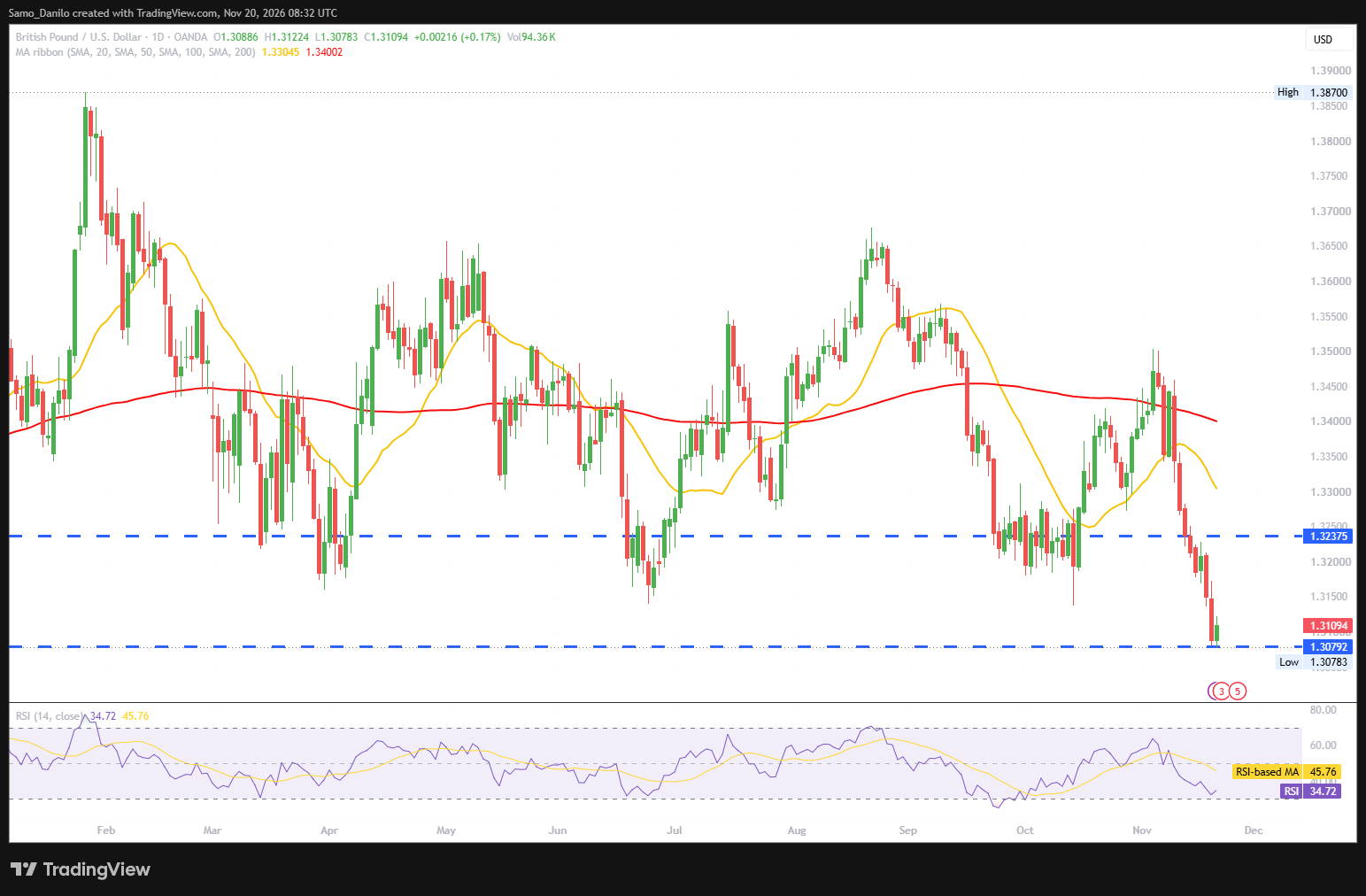
| SMA (20) | Slightly Falling | |
|
| RSI (14) | Falling | | |
| MACD (12, 26, 9) | Falling | | |
Closing statement: GBP/USD has found some support from stronger UK retail sales and a softer US dollar, although the broader outlook remains influenced by central bank policy expectations. Hawkish comments from Fed officials could limit further upside for the pair, while resilient UK consumer spending and the BoE's commitment to its inflation target may provide support to sterling. Further Fed commentary and incoming UK economic data will remain key drivers of the pair's direction.
XAUUSD
- XAU/USD Price: Gold (XAU/USD) has recovered from heavy intraday losses that pushed it to its lowest level since September 2025, trading above $3,550 during early European trading on Friday.
- Ukraine war: US President Donald Trump reportedly told European leaders that Russian President Vladimir Putin wants to end the war in Ukraine, according to Axios.
- Anthropic's IPO: Anthropic's Nasdaq debut provided a fresh test of investor appetite for the artificial intelligence sector, marking the arrival of the first publicly traded frontier AI company. Following an $81 billion IPO priced at $83 per share, the stock opened 34% higher at $111.50, highlighting strong initial investor demand.
- PBoC rates: China's People's Bank of China (PBoC) maintained its key lending rates at record lows for the 18th consecutive month in November 2026. The decision was in line with market expectations, signalling continuity in China's accommodative monetary policy.
- Fed speakers: Federal Reserve officials Christopher Waller and Lisa Cook, both permanent voting members, are scheduled to speak publicly.
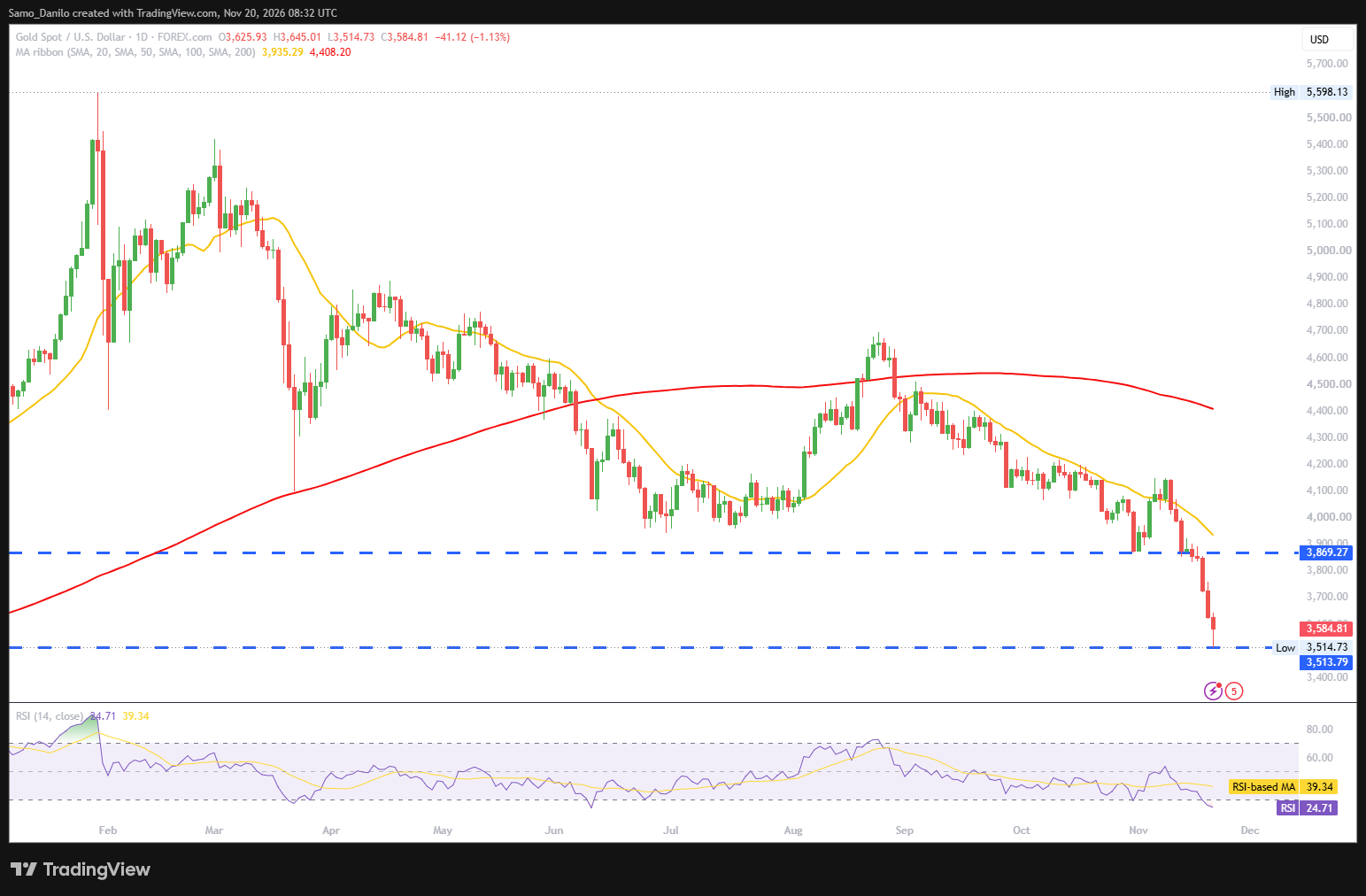
| SMA (20) | Slightly Falling | |
|
| RSI (14) | Falling | | |
| MACD (12, 26, 9) | Falling | | |
Closing statement: Gold remains under bearish pressure above $3,550, despite recovering from its latest intraday lows. Reduced geopolitical uncertainty and expectations surrounding US monetary policy could continue to weigh on the precious metal, while upcoming comments from Waller and Cook may trigger further volatility. The market will remain focused on signals regarding the Fed's next policy moves, with a more hawkish tone potentially extending gold's decline.
CRUDE OIL
- Crude Oil Price: West Texas Intermediate (WTI) oil prices showed limited movement on Friday after posting modest gains in the previous session. The US crude benchmark is trading around $83.20 per barrel during European hours.
- Trilateral talks: US President Donald Trump, Chinese President Xi Jinping and Russian President Vladimir Putin held trilateral talks in Shenzhen, discussing peace and nuclear disarmament before agreeing on a symbolic peace declaration.
- Putin's remark: Following the meeting, Putin said discussions also covered UN reform and international security. However, he confirmed that there was no agreement to make trilateral summits between the three leaders a regular occurrence.
- Houthi attack: Saudi civil defence officials reported that a tower in Riyadh's financial centre was hit in a Houthi attack.
- Global oil: The International Energy Agency projects a global oil supply surplus of approximately 2 million barrels per day during the current quarter. Goldman Sachs has also warned of a possible oversupply next year, reinforcing concerns that abundant supply could put downward pressure on crude prices.
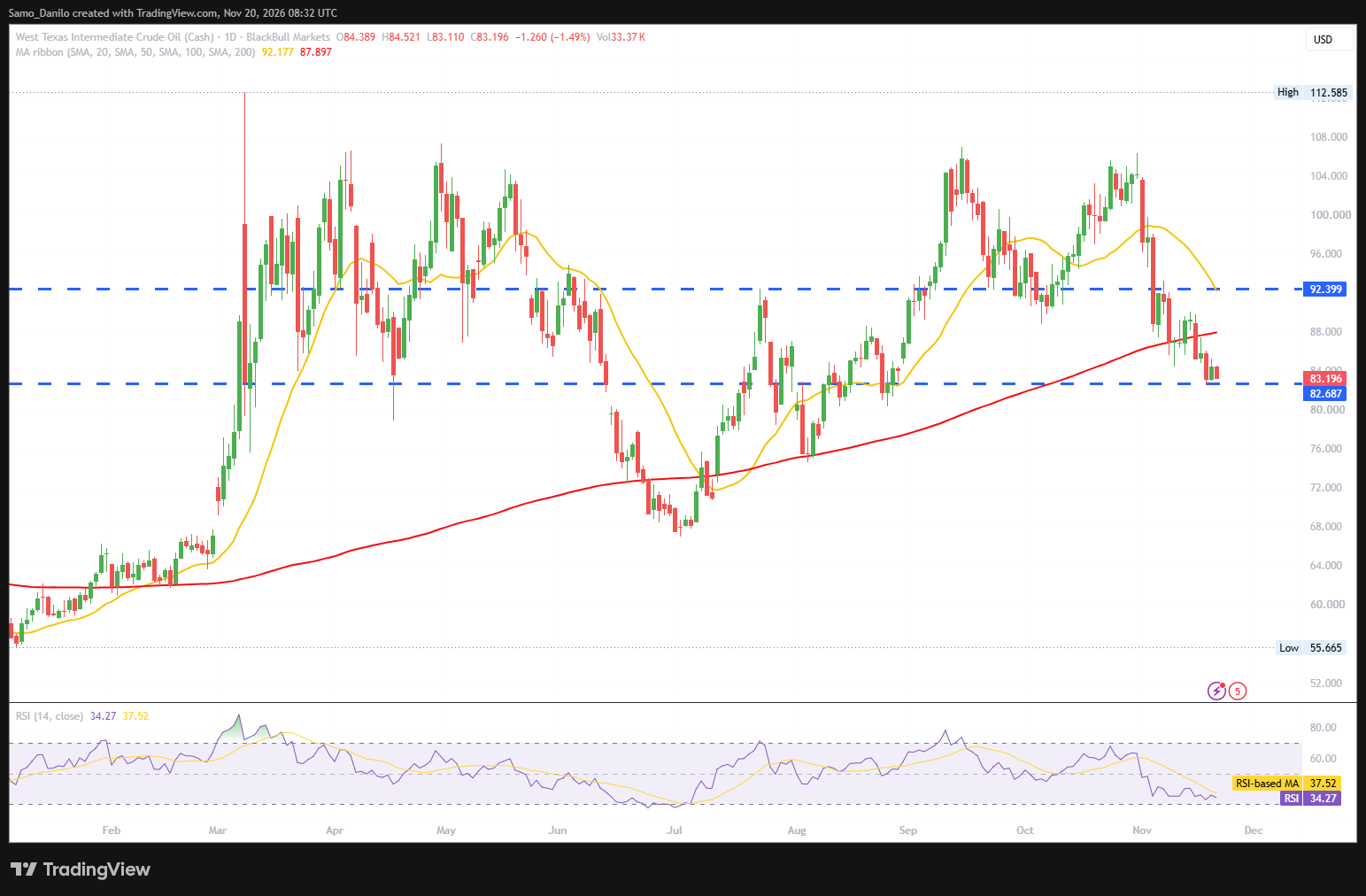
| SMA (20) | Falling | | |
| RSI (14) | Falling | | |
| MACD (12, 26, 9) | Falling | | |
Closing statement: WTI remains relatively stable around $83.20, with geopolitical tensions providing some support despite growing concerns over excess global supply. The lack of concrete progress in the trilateral talks leaves uncertainty surrounding Ukraine and Iran, while the reported attack in Riyadh adds another potential source of upside risk. However, expectations of a substantial supply surplus could limit gains and keep the broader outlook under pressure.
DAX
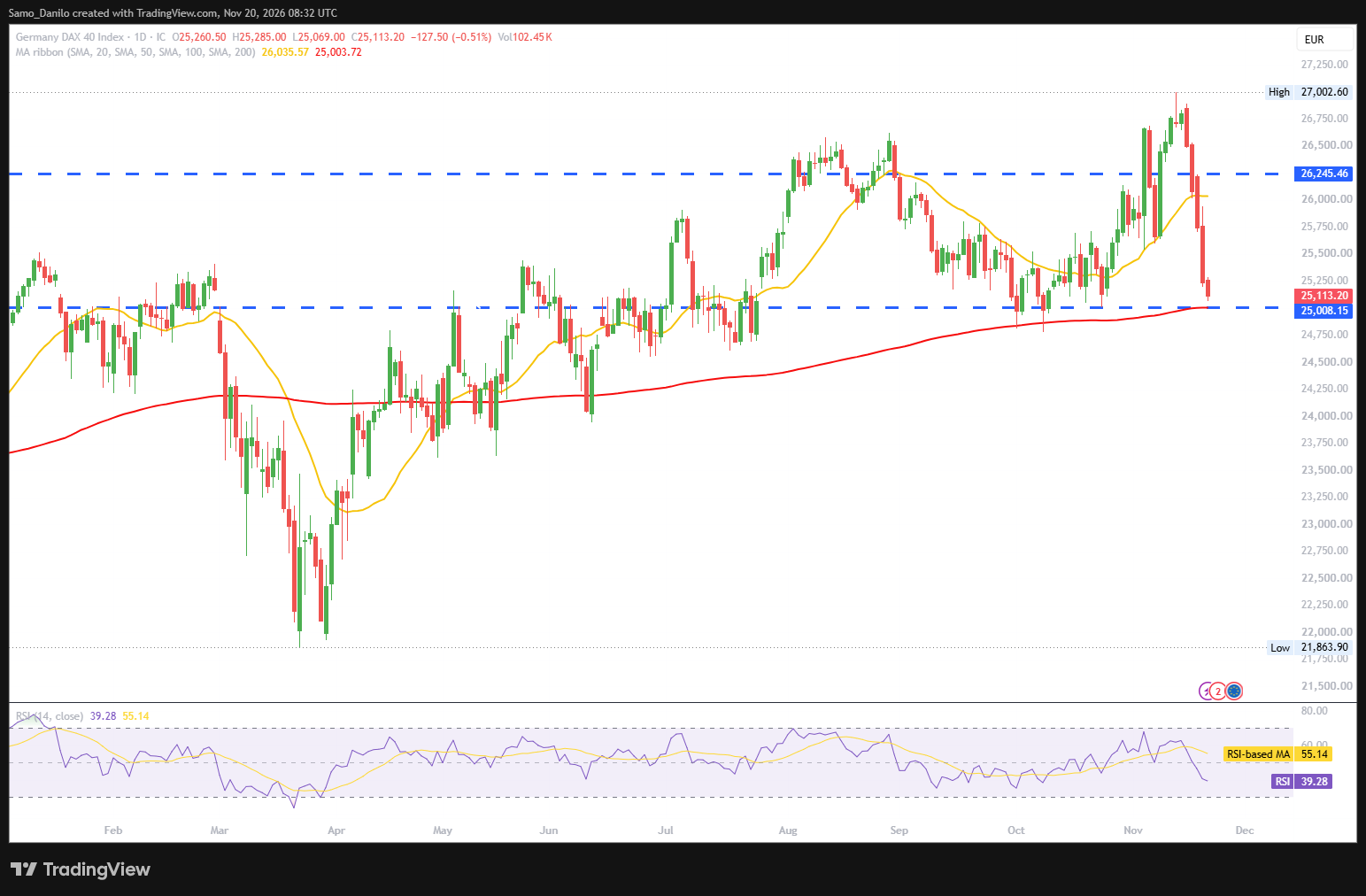
- DAX 40 Price: The DAX 40 continues to struggle following last week's record high, extending its corrective phase amid weaker market sentiment. The index is currently trading around 25,130 points, remaining under pressure.
- Producer prices: German producer prices increased by 1.4% month-on-month in October, according to Destatis, exceeding market expectations of 0.9% but slowing from September's 1.9% rise. On an annual basis, PPI accelerated to 8.1% from 6.7%, reaching its highest level in more than three years and significantly beating the 7.2% consensus.
- ECB expectations: Stronger-than-expected producer price figures reinforce the case for further European Central Bank monetary tightening. However, the impact on the euro has remained limited, as markets have already priced in a 25-basis-point rate hike at the December meeting.
- Bundesbank report: According to its latest monthly report, the Bundesbank expects German GDP growth to accelerate in the fourth quarter, supported by expansionary fiscal policy.
- ECB's Panetta: ECB policymaker Fabio Panetta stressed that the central bank must prevent inflation from becoming entrenched in the economy. His comments reinforce the ECB's determination to maintain a restrictive policy stance if price pressures remain elevated.
| SMA (20) | Rising |  | |
| RSI (14) | Falling | | |
| MACD (12, 26, 9) | Slightly Falling | |
Closing statement: The DAX 40 remains under bearish pressure around 25,130 points, as accelerating producer prices and expectations of further ECB tightening raise concerns about borrowing costs and corporate profitability. However, the Bundesbank's more optimistic growth outlook, supported by expansionary fiscal policy, could offer some underlying support. The index's near-term direction will depend on whether improving economic prospects can offset concerns about persistent inflation and tighter monetary conditions.