
EURUSD
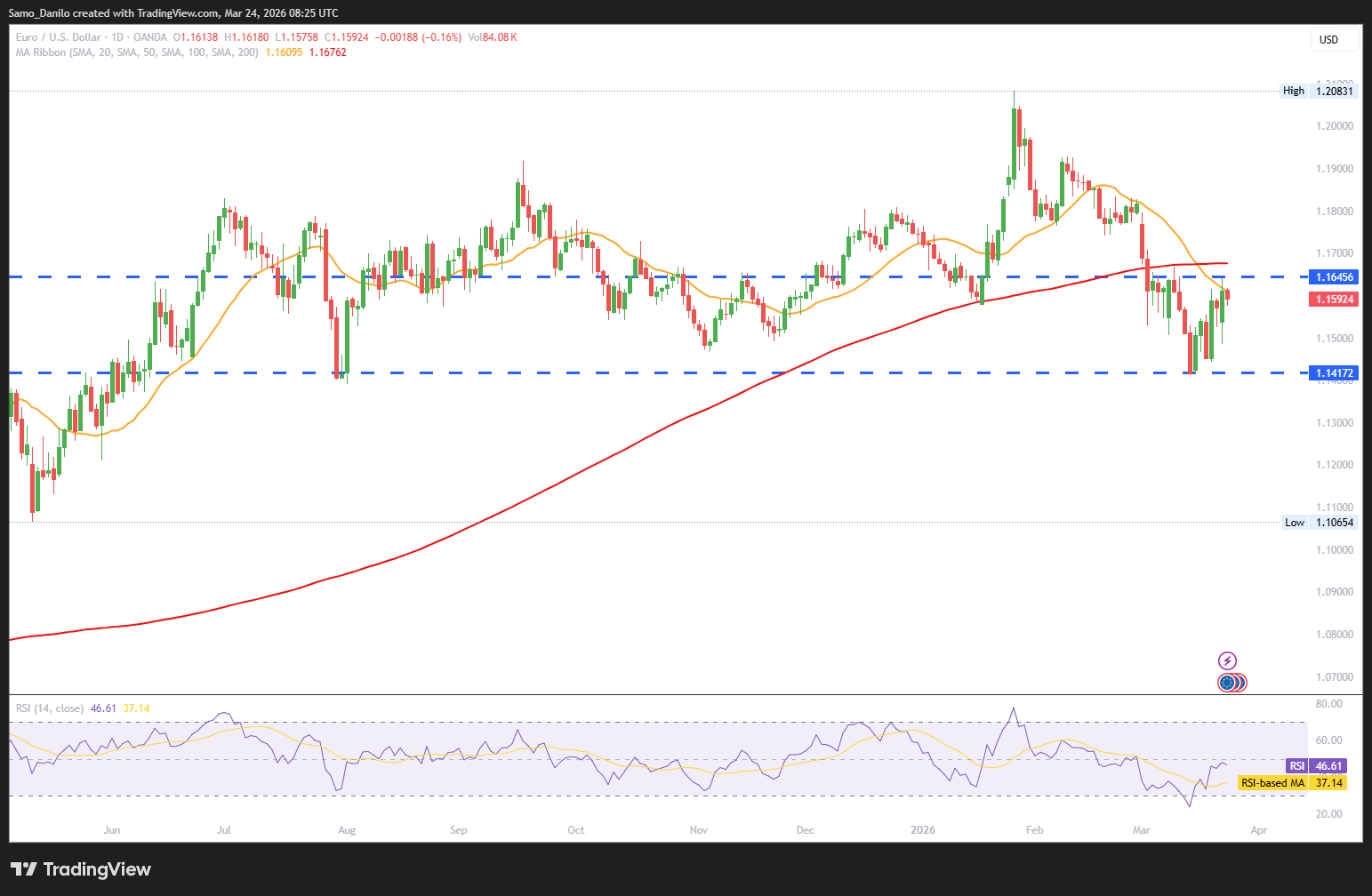
- EUR/USD Price: The EUR/USD is trading lower near 1.1600 during European hours, giving back part of the previous session’s gains. The pullback reflects cautious market sentiment and renewed USD demand.
- ECB rate: The European Central Bank kept its deposit rate at 2.00% at the March meeting. However, rising inflation risks, largely driven by higher energy prices, are fueling expectations of future tightening.
- Major banks: Analysts at Goldman Sachs, along with JPMorgan Chase and Barclays, expect two 25 bps ECB rate hikes in the coming months. This shift signals a more hawkish outlook for Eurozone monetary policy.
- Geopolitical uncertainty: Donald Trump hinted at potential talks with Iran, offering a short reprieve window. However, Iranian officials denied any negotiations, keeping geopolitical tensions elevated and supporting the safe-haven USD.
- PMI data: Markets now turn to preliminary Purchasing Managers Index readings from the US, Eurozone, and Germany. These data releases are expected to provide fresh insights into economic momentum and near-term currency direction.
| SMA (20) | Falling |  | |
| RSI (14) | Slightly Rising |  |
|
| MACD (12, 26, 9) | Falling | | |
Closing statement: EUR/USD remains under pressure in the short term, with geopolitical uncertainty supporting the Dollar, though rising ECB tightening expectations could offer medium-term support for the Euro.
GBPUSD
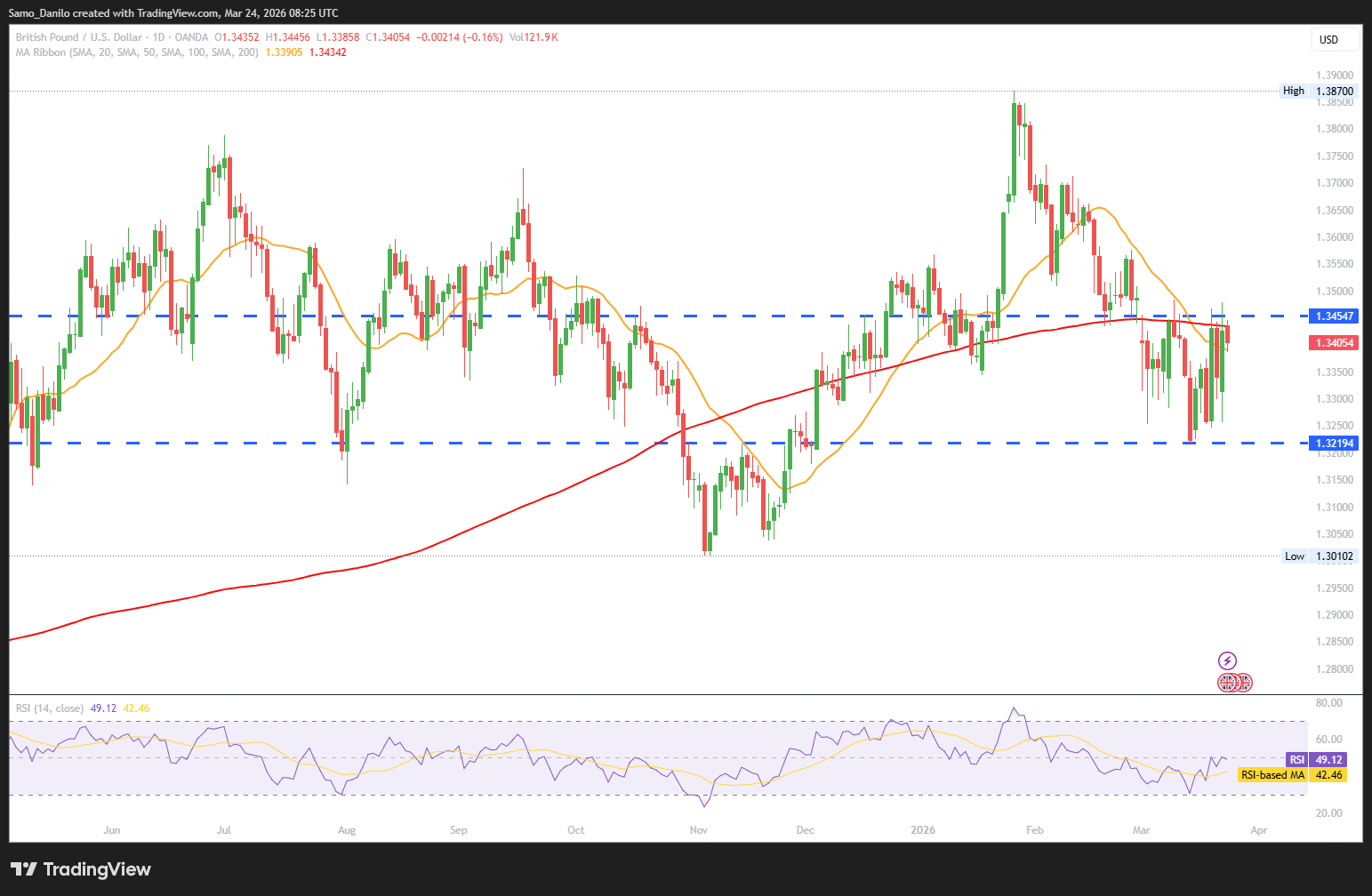
- GBP/USD Price: The GBP/USD is facing renewed selling pressure, slipping toward 1.3420 during European trading. The move reflects a cautious tone as markets reassess both UK and US outlooks.
- BoE signals: The Bank of England kept interest rates unchanged at 3.75% last week. However, its message that it is “ready to act” in response to geopolitical risks has strengthened expectations for tighter policy later this year.
- Bailey's warning: Andrew Bailey highlighted that the Middle East conflict could trigger an economic shock and push inflation higher. He emphasized that restoring stability in the Strait of Hormuz is critical to easing energy price pressures.
- PMI data: Investors are closely watching the S&P Global Purchasing Managers Index releases. UK manufacturing and services PMIs are expected to soften slightly, which could challenge the recent hawkish repricing of BoE expectations.
- Inflation data: Attention will shift to the upcoming Consumer Price Index report for February. A stronger-than-expected reading would reinforce expectations of higher rates, while weaker data could weigh on the Pound.
| SMA (20) | Falling | | |
| RSI (14) | Slightly Rising | |
|
| MACD (12, 26, 9) | Falling | | |
Closing statement: GBP/USD remains sensitive to both geopolitical developments and incoming UK data, with inflation and growth signals likely to determine whether the pair stabilizes or extends its downside.
XAUUSD
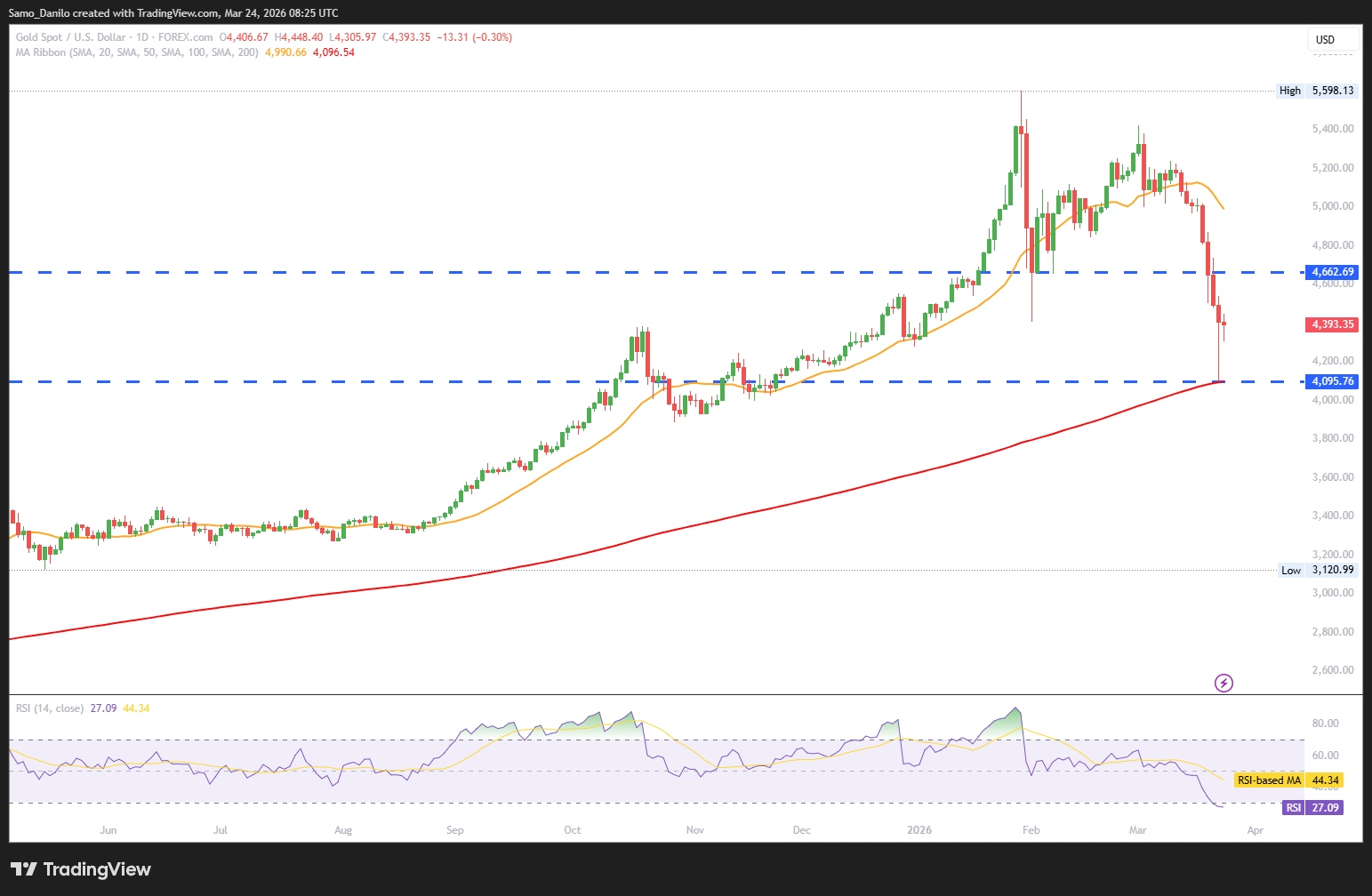
- XAU/USD Price: The XAU/USD has recovered a large part of its intraday losses, climbing toward the $4,400 level. However, the upside remains limited, suggesting weak bullish conviction in the current environment.
- Fed's Goolsbee: Austan Goolsbee expressed optimism that interest rates could decline by late 2026, depending on further progress on inflation. This indicates a cautiously dovish outlook but not an imminent shift in policy.
- Fed's Miran: Stephen Miran stated it is too early to assess the inflationary impact of rising energy prices due to the Iran conflict. This uncertainty keeps markets sensitive to incoming data and geopolitical developments.
- Geopolitical tensions: Renewed strikes by Israel on Iran continue to fuel instability. Despite signals from Donald Trump about a possible pause, Iranian officials denied any negotiations, pointing to prolonged tensions.
- Iran signals: Statements from Abbas Araghchi, Mohammad Bagher Ghalibaf, and Mohsen Rezaei suggest no near-term resolution. This ongoing uncertainty continues to provide underlying support for safe-haven assets like gold.
| SMA (20) | Slightly Rising | |
|
| RSI (14) | Falling | | |
| MACD (12, 26, 9) | Falling | | |
Closing statement: Gold is stabilizing on geopolitical support, but limited upside reflects the counterbalance of cautious Fed expectations and uncertainty around inflation dynamics.
CRUDE OIL
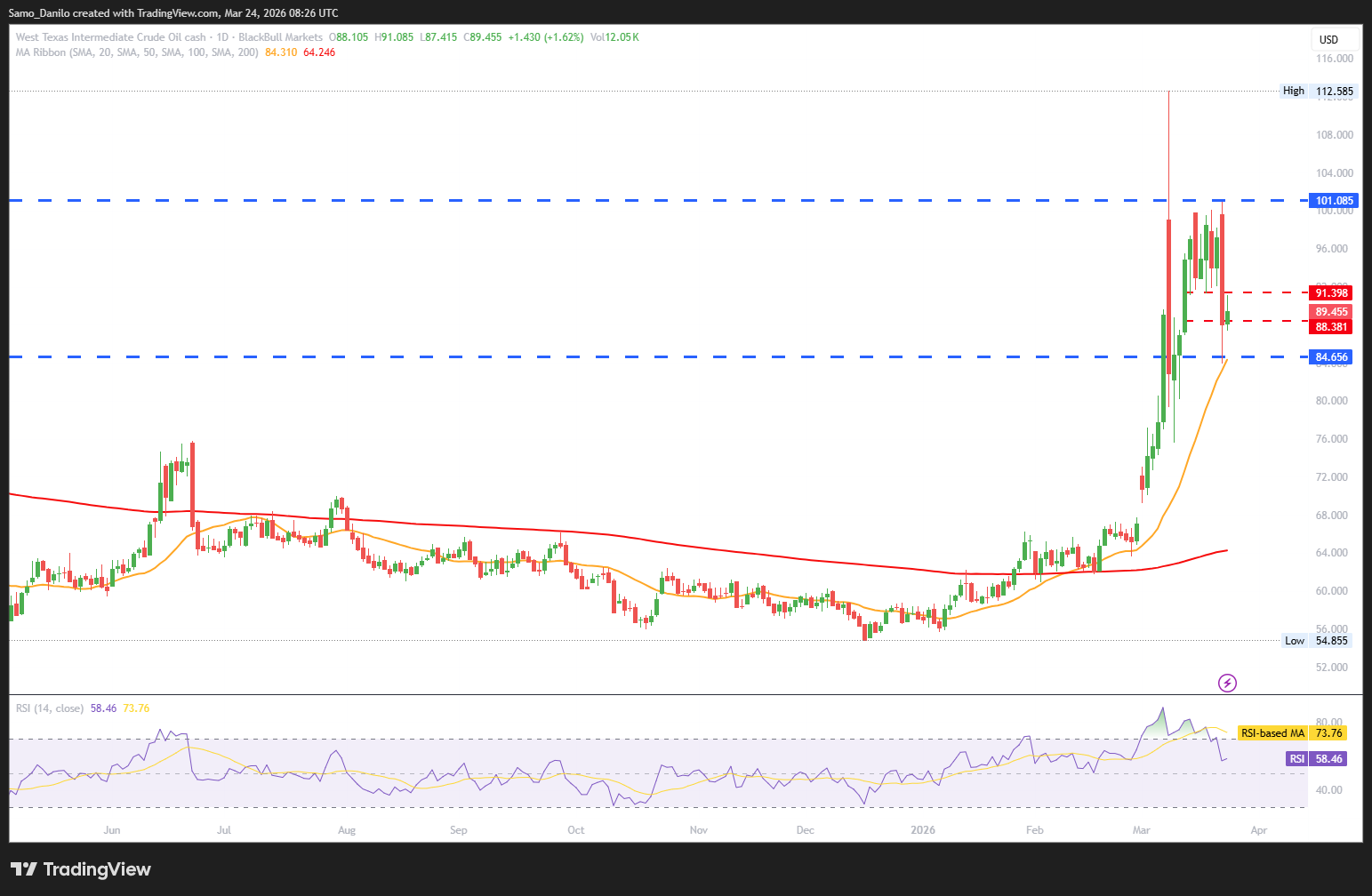
- Crude Oil Price: The West Texas Intermediate is gaining traction, trading around $89.40 after rebounding from the $84 level, a near two-week low. The recovery suggests renewed buying interest after the recent pullback.
- Geopolitical news: Rising tensions in the Middle East, particularly involving Iran, are lifting Crude Oil prices. Increased risk of attacks on energy infrastructure is fueling fears of broader regional disruption.
- Saudi Arabia signals: Saudi Arabia is reportedly considering more direct military involvement, according to the The Wall Street Journal. This follows fresh strikes by Israel and the United States, further escalating tensions.
- Strait of Hormuz: The Strait of Hormuz remains heavily restricted, though limited transit has resumed under strict Iranian control. Some LPG vessels have reportedly passed through toward India, indicating partial but fragile normalization.
- China’s Sinopec: Sinopec has stated it will not purchase Iranian crude, even after a US waiver. This highlights ongoing caution among major buyers and adds complexity to global supply dynamics.
| SMA (20) | Rising | | |
| RSI (14) | Slightly Rising | |
|
| MACD (12, 26, 9) | Slightly Rising | |
Closing statement: Crude oil prices are rebounding on heightened geopolitical risks and supply concerns, but partial normalization of shipping routes and cautious demand signals may limit further upside in the short term.
DAX
- DAX Price: The DAX has reversed its sharp rebound, falling back toward 22,610 points. The earlier recovery now appears temporary as geopolitical uncertainty continues to dominate sentiment.
- Consumer confidence: Data showed consumer confidence dropping to -16.3 in March, the lowest level since October 2023. This deterioration highlights growing concerns about economic outlook and spending amid rising uncertainty.
- EU-Australia: The European Union finalized a major trade agreement with Australia, removing tariffs on most goods. While positive long term, its immediate impact on markets remains limited given current macro pressures.
- PMI data: Preliminary Purchasing Managers Index data is expected to show manufacturing slipping back into contraction territory. Rising energy costs linked to the Iran conflict are likely weighing on industrial activity.
- Auto sector: According to the European Automobile Manufacturers Association, EU car registrations rose slightly in February but remain down for the year overall. This reflects uneven demand conditions across the region.
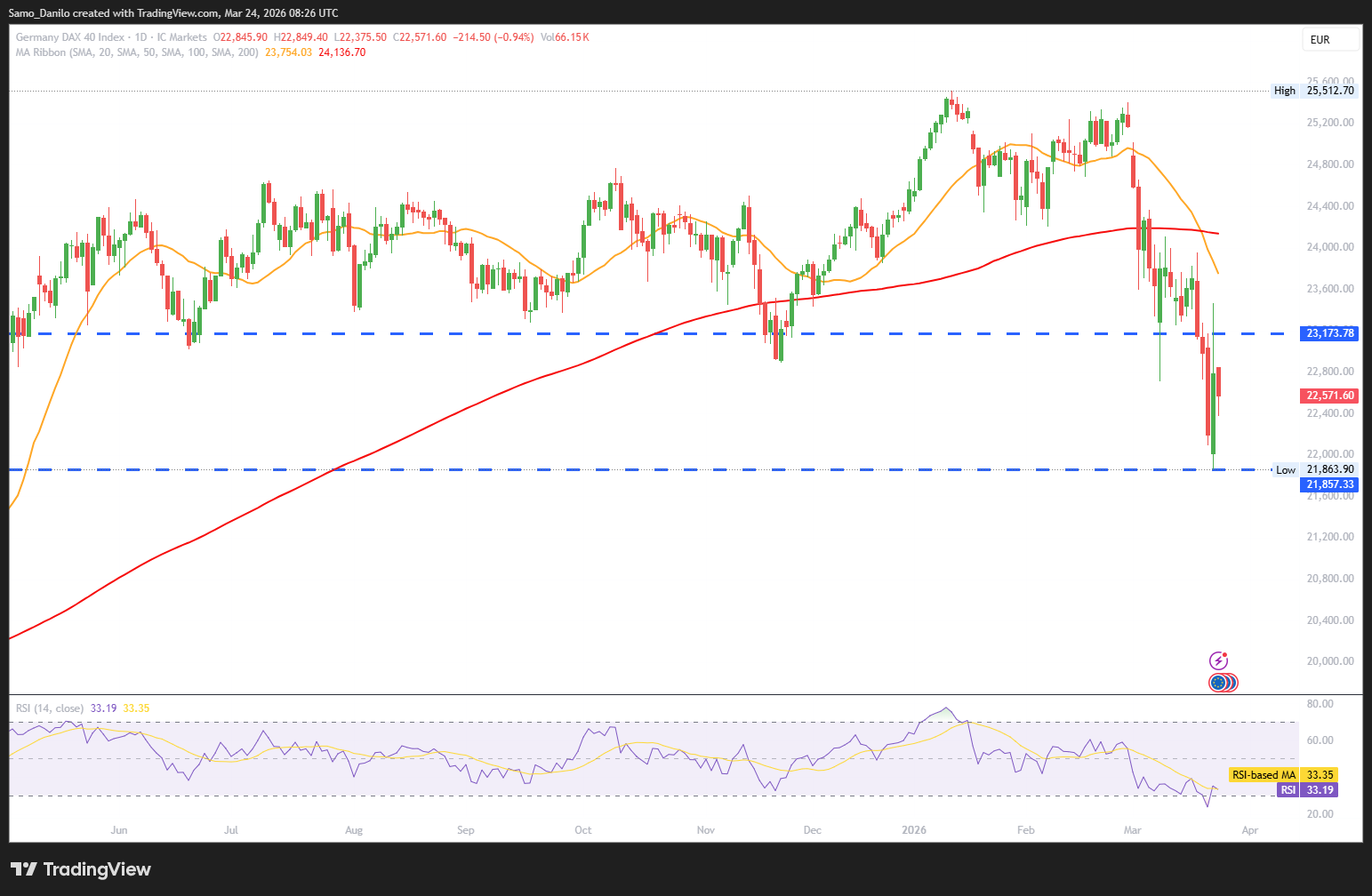
| SMA (20) | Falling | | |
| RSI (14) | Falling | | |
| MACD (12, 26, 9) | Falling | | |
Closing statement: The DAX remains under significant pressure as weakening economic indicators and geopolitical risks overshadow positive structural developments, pointing to continued downside risks in the near term.